Automatic Trust in AI: The Risk of Automation Bias
When an AI answer is well written and self-assured, we tend to accept it without checking. That mental shortcut has a name — automation bias — and it's the quietest way a decision gets weaker. Fluency isn't correctness: comparing complementary perspectives breaks the reflex and hands you back control.
by Redazione AI Arena
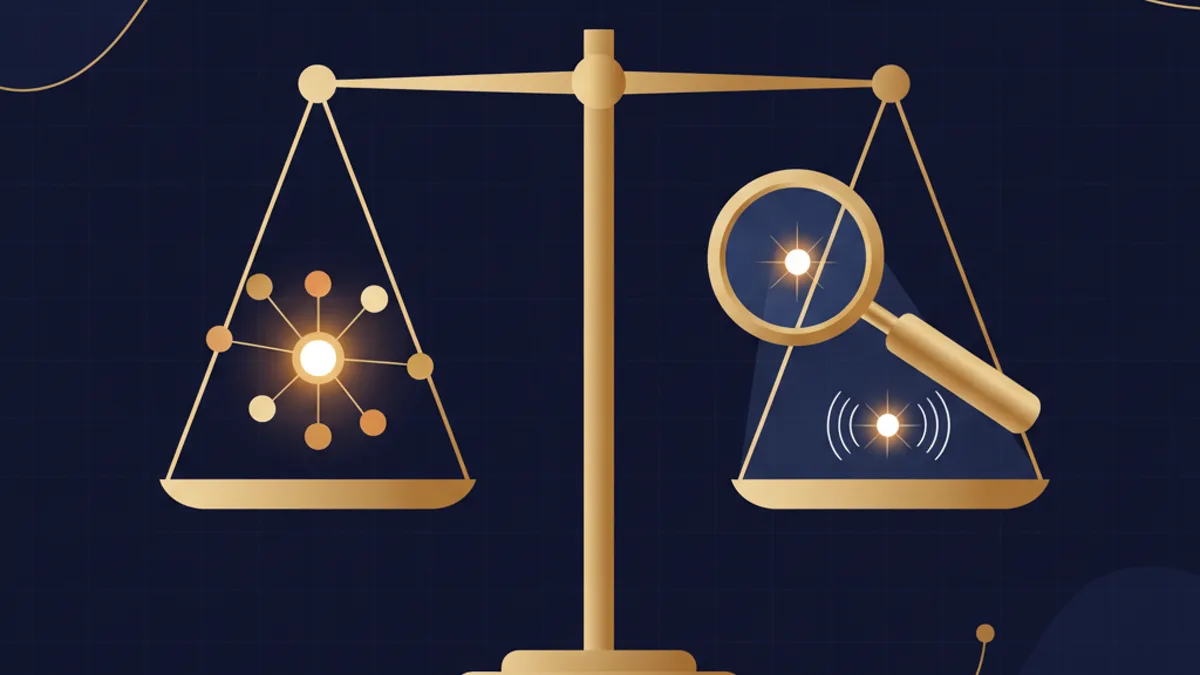
There's a precise moment, in everyday work with AI, when a decision gets weaker without our noticing. It isn't when the model gets something wrong. It's one instant earlier: when we read a well-written, self-assured answer and decide — almost always without thinking — to trust it. That small act of surrender has a name, and it's the most underrated risk in this whole technology.
What automation bias is
Automation bias is the tendency to accept whatever an automated system produces without giving it the same critical scrutiny we'd reserve for a human source. It isn't new to AI: it's been studied for decades in aviation and medicine, where operators were found to follow a tool's suggestion even when a basic check would have disproven it. The mechanism is simple: if a machine says so, it must be right.
With today's language models this reflex finds ideal ground. The answer isn't a number on a dashboard: it's an articulate piece of text, in smooth prose, built to sound competent. And the more polished the form, the lower we drop our guard. Automatic trust stops being an exception and becomes the default setting we read with.
Why AI amplifies it
Two forces work together against us. The first is cognitive saving: verifying takes effort, accepting doesn't. Handing judgment to a tool is a shortcut the brain loves, because it frees attention for other things. The second force is the shape of the answer itself. A model is trained to produce plausible, coherent text with no hesitation — and the absence of hesitation has always read, to us, as a sign of competence. So we swap the confidence of the style for the solidity of the content.
On top of this comes a well-known trait of many systems: the tendency to please the writer (sycophancy), that is, to confirm the framing of the question rather than push back on it. The result is an answer that not only sounds authoritative but is also incentivized to agree with you. Hard to imagine a worse combination for anyone who should stay critical: a tool that's fluent, confident and politely on your side.
The hidden cost of automatic trust
The trouble with automation bias is that you can't see it while it happens. An answer accepted too quickly leaves no trace: it looks identical to one you actually checked. The cost surfaces later, when the decision built on that basis turns out to be fragile and no one remembers the moment the check was skipped.
Fluency measures the quality of the form, not the truth of the content. An answer can be beautifully written and still rest on an outdated fact — every model has a knowledge cutoff beyond which it hasn't seen the world — or on an assumption never made explicit, or on a simplification that doesn't hold in that specific case. The perfect form hides all of this. And when you get a single answer, you have no point of comparison to help you judge how robust it is: you take it as it is, because there's nothing beside it to weigh it against. With no alternatives, any answer becomes by definition the best available — not because it truly is, but because it's the only one you've seen.
Breaking the reflex: from monologue to comparison
The good news is that automation bias has a precise weak spot: it lives on a single voice. The reflex to trust kicks in when there's one answer, authoritative and unopposed. Remove that condition and the reflex switches off.
This is where the method changes everything. When you bring several complementary perspectives to the same problem and have them write side by side, the differences become visible — and a visible difference is an invitation to evaluate, not to accept. Where the models converge, you have confirmation; where they diverge, you've pinpointed exactly the spots that deserve a second look. The comparison brings back the healthy friction that a single answer tends to erase, and it does so without asking anything extra of you: you're the one who selects what's useful, refines where needed and digs deeper where the ground is uncertain.
Opening three tabs and pasting the same question isn't enough: you get detached, disconnected conversations, three isolated monologues you'd have to compare by hand, with no meta-layer to surface agreements and disagreements. What you need is a flow that organizes the comparison and makes it readable, turning divergence into material for a decision that's yours and informed, not into extra work.
Enter Arena
AI Arena is the platform that pits multiple AI identities with different perspectives against the same problem, lets you select the most useful answers and uses an Orchestrator to carry you to the next step — it doesn't replace your decision, it makes you take it with more awareness.
Pick your team from 7 complementary specialists, run the flow on the problem where you don't want to settle for a single self-assured voice, and watch where they converge and where they split. That comparison is the most direct antidote to automatic trust: it puts your judgment back at the center instead of letting it slip away. Next time an answer looks too perfect to question, don't trust the reflex. Enter Arena and decide by looking at more than one perspective.
FAQ
What is automation bias when using AI?
It is the tendency to accept an answer produced by an automated system without checking it, simply because it comes from a machine and sounds authoritative. With AI the effect grows stronger: the text is fluent and self-assured, and that surface pushes us to skip the critical review we would apply to a human source.
Why do we tend to over-trust AI answers?
For two reasons that stack up. The first is cognitive saving: delegating is easier than verifying. The second is the shape of the answer, fluent and free of hesitation, which our brain reads as a sign of competence. So the confidence of the style gets mistaken for the solidity of the content.
Does the fluency of an AI answer guarantee it is correct?
No. A model is optimized to produce plausible, well-formed text, not to be certified correct. An answer can be perfectly written and still be incomplete, outdated or wrong. Fluency measures the quality of the form, not the truth of the content, and confusing the two is the core mistake.
How do you reduce the risk of automatic trust in AI?
By removing the single self-assured voice that triggers the reflex. When you compare several complementary perspectives on the same problem, the differences become visible and force you to evaluate instead of accept. The comparison brings back the healthy friction that a lone answer tends to erase.
Does Arena decide for me by comparing AIs?
No. AI Arena compares complementary perspectives, lets you select the most useful answers and uses an Orchestrator to carry you to the next step. It does not replace your decision: it makes you take it with more awareness, exposing what a single fluent answer would keep hidden.