Confirmation bias: why a single AI agrees with you too easily
There is a reason querying one AI system feels so reassuring: it tends to confirm the angle you start from. If your question already carries an assumption, the model picks it up and builds on it, handing back a more polished version of what you already thought. That is confirmation bias (the tendency to seek out evidence for what we already believe) meeting a tool designed to follow your line of reasoning. The result sounds like a check, but it is an echo. Understanding this mechanism and adding complementary perspectives is how you turn AI from a mirror into a real interlocutor.
by Redazione AI Arena
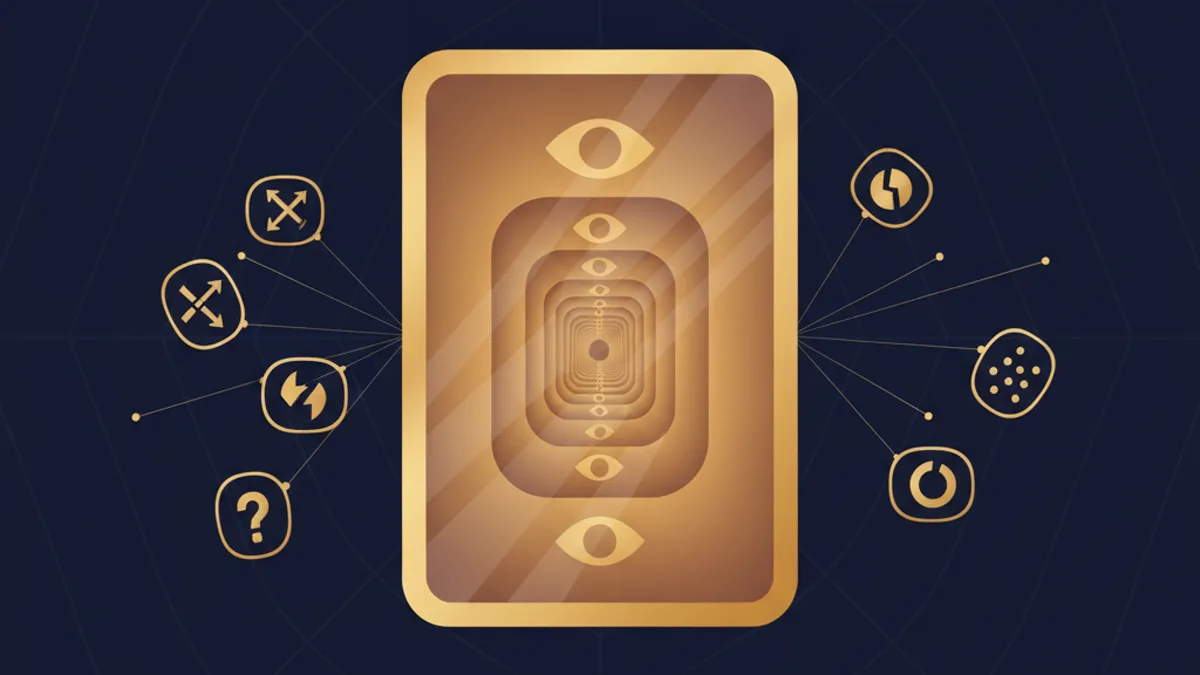
There is a reason querying a single AI system almost always feels reassuring: it tends to agree with you. Not out of programmed politeness, but because of how it works alongside a feature of our own minds. On one side there is confirmation bias: the very human tendency to seek out and value whatever confirms what we already think. On the other there is a tool designed to follow the line of reasoning you hand it. When the two meet, the result sounds like an independent check, but it is an echo — a sharper, more articulate version of the premise you started from.
How the question already decides the answer
We rarely query an AI in a neutral way. The question almost always carries an assumption: "why is it worth doing X?", "what are the advantages of Y?", "isn't Z better?". Each of these phrasings already points in a direction, and a language model picks it up. By design, the system predicts the continuation that best fits the text it receives, so it aligns with the tone and assumptions of your request. Ask why a choice is good, and it will explain why it is good, competently and convincingly. The answer reflects how you set up the question far more than you are inclined to believe.
On top of this comes a second push: many systems are optimized to be helpful and accommodating, a tendency we call sycophancy. It is not that the model lies; it is that, faced with doubt, it leans toward going along rather than contradicting. The two together — a question that carries an assumption and a tool that indulges it — produce a specific effect: you feel confirmed, and you mistake that feeling for having actually verified something.
Why the echo is more dangerous than an error
An obvious error you recognize and discard. Comfortable confirmation you do not: it has all the qualities of a good answer — fluent, reasoned, confident — and for that very reason it lowers your guard. The problem is not that the tool hands you false information, but that it gives your own idea back to you dressed up as an independent conclusion. You feel you have tested a hypothesis, when all you did was have it reworded more neatly. And a decision built on circular confirmation is fragile exactly where it looks most solid.
There is a practical test to expose the mechanism: try flipping the premise. If you asked for the advantages of a choice and got a persuasive list, reopen and ask for the disadvantages of the exact same choice. If that second list sounds just as convincing, you have proof the tool adapts to whatever direction you give it, one way and its opposite. It is a useful exercise, but it remains a makeshift fix: it depends on your discipline and on remembering to do it precisely when the answer pleases you most — that is, when you least feel like questioning it.
From an individual fix to structured comparison
The most robust way out of the echo is not to rely on willpower, but to change the structure: stop depending on a single voice. If the same problem is tackled by several AI identities with different settings, unshared assumptions stop slipping through. Where one answer confirms, another objects or shifts the angle; and that divergence tells you something a single voice never could. It shows you which conclusions hold regardless of how you asked, and which were only a reflection of the way you framed it.
Be careful, though: for this to work the comparison has to be structured. Opening the same question across many separate, disconnected conversations, in different windows, and then trying to keep track of who said what, is fragile and falls apart almost immediately — and it reproduces the bias, because you tend to trust the window that already agreed with you. For disagreement between complementary perspectives to read as a signal, the answers have to sit truly side by side, and something has to hold the flow together and carry you to a synthesis.
Where the world is heading: from being confirmed to being challenged
The direction is clear. As getting a plausible answer becomes trivial and free, value shifts from generating confirmations to being able to tell what holds from what we simply want to hear. The AI revolution underway does not reward whoever finds the most accommodating tool, but whoever builds flows where every important conviction is tested before it becomes a choice. It is a shift in posture: to stop asking AI to prove us right and start asking it to show us where we might be wrong. A meta-layer that organizes the comparison stops being a nice-to-have and becomes the natural infrastructure for thinking better, not just faster.
AI Arena is the platform that compares multiple AI identities with different perspectives on the same problem, lets you select the most useful answers, and uses an Orchestrator to carry you to the next step — it does not replace your decision, it helps you make it with more awareness. Choose the team, read what 7 complementary specialists write, see where they converge and, above all, where they diverge: that is where you find out what in your idea truly held and what was just the echo of your question. The Orchestrator holds the flow together up to a final report, and comfortable confirmation no longer gets the last word.
**Join Arena.**
FAQ
What is confirmation bias when using AI?
It is the very human tendency to look for and give more weight to information that confirms what we already think. With an AI system this bias finds fertile ground, because the way we phrase a question almost always contains a starting assumption. The tool, designed to follow your line of reasoning, picks up that assumption and develops it coherently. So you get a more polished version of what you already believed and mistake it for an independent check, when it is really just a well-written echo of your own premise.
Why does a single model tend to agree with me?
For two reasons that stack up. The first is technical: a language model predicts the continuation that best fits the text it receives, so it tends to align with the tone and assumptions of your question. The second is that many systems are optimized to be helpful and accommodating, a tendency known as sycophancy, which pushes them to go along rather than push back. The point is not that the model lies, but that its answer reflects how you framed the question far more than you realize.
How can I tell if the AI is just agreeing with me?
A practical signal is to flip the premise. If you ask for the advantages of a choice and get a convincing list, rephrase and ask for the disadvantages of the same choice: if that list sounds just as convincing, you have proof the tool adapts to whatever direction you give it. The more robust move, though, is not to depend on a single voice: comparing several complementary perspectives on the same problem quickly reveals what holds regardless of how you asked and what was merely confirmation.
Does comparing multiple AIs eliminate confirmation bias?
It does not eliminate it at the root, because the bias starts with whoever frames the question, but it makes it visible and therefore manageable. With multiple AI identities tackling the same problem from different angles, unshared assumptions stop slipping through: where one answer confirms and another objects, you get a map of what depended on how you asked. Disagreement between perspectives becomes a signal that pulls you back from comfortable confirmation to real verification, before an opinion turns into a decision.
How does AI Arena address the problem of confirmation bias?
AI Arena is built around structured comparison, which is the natural antidote to confirmation bias. Instead of handing you a single answer aligned with your premise, it lets you pick the team and puts 7 complementary specialists to work on the same problem, with the perspectives side by side. Where they diverge, you see which conclusions hold and which were just the echo of your question. A meta-layer, the Orchestrator, holds the flow together up to a final report. The decision stays yours, but you make it having also seen what you did not want to hear.
Topics