Trusting AI by Method, Not by Habit
The more we use AI, the more we trust what it writes — and trust that started out verified soon slips into habit. It answers well once, twice, ten times, and by the hundredth round we stop checking. It is a human, understandable reflex, but it is also the point where AI turns most dangerous: not when it is wrong, but when it is wrong after we have stopped watching. This piece separates trust by habit from trust by method, shows why the first is a risky shortcut and the second a real edge, and how comparing multiple perspectives turns trusting from a reflex into a deliberate choice — right up to the point where the argument leads naturally to Arena.
by Redazione AI Arena
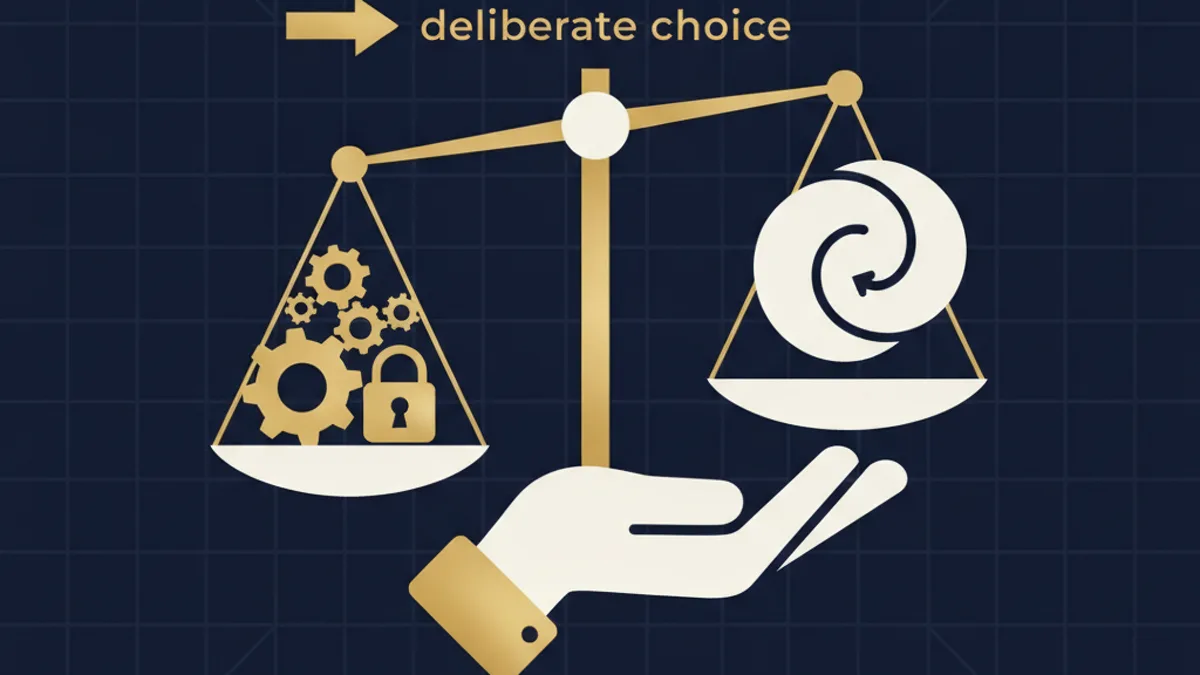
The more we use AI, the more we trust what it writes. At first that trust is alert: we read carefully, we check, sometimes we correct. But the mind looks for shortcuts, and after the model has answered well once, twice, ten times, by the hundredth round we stop looking. Trust, which used to be earned, becomes a reflex. It is a human, understandable mechanism — but it is also the exact point where AI turns most treacherous: not when it is wrong, but when it is wrong after we have stopped checking.
Trust by habit is a risky shortcut
There is a name for this slide: automation bias. It is the tendency to give more weight to what an automated system says than to your own judgment, and it grows stronger the more often that system gets it right. It is a cognitive saving: if something keeps working, dropping the doubt frees up energy for other things. In most of life that is a sensible strategy. With AI, less so.
The reason is that language models are fluent and confident even when they are wrong. They do not hesitate, they do not stumble, they do not change tone when they wander into ground they know badly: they produce a well-written error with the same ease they produce a correct answer. So the error shows up well dressed, and it shows up precisely when, out of habit, we have let our guard down. Trust by habit is not dangerous because AI is often wrong — it is often right — but because it removes the one filter that would have caught the time it was.
What trusting by method means
Trusting by method does not mean distrusting everything. Blanket suspicion is tiring, slow and, in the long run, we give it up — sliding straight back into habit. Method is something else: it is trust that stays aware, that knows why it trusts, on what, and how far.
The operating principle is simple: size your checking to the cost of being wrong. Not all answers weigh the same. If I am rewording a sentence or hunting for an idea, verifying every word in depth is a waste: a critical read is enough and I move on. If I am about to make a decision with concrete consequences — something hard to undo, that touches money, people or reputation — then verification is not an extra, it is part of the work. Dosing your attention by how much the outcome weighs is what keeps trust efficient without making it naive.
There is also a difference in stance. Someone who trusts by habit asks the AI *what the answer is* and takes it. Someone who trusts by method also asks *why that answer*, what the alternatives were, what would make it fragile. That is not distrust: it is staying in the driver's seat instead of handing over the wheel because the car has steered fine on its own so far.
Comparison turns trust into a choice
The limit of a single conversation with an AI is that it gives you one voice, very confident, and no handle for telling whether you are reading a solid point or a fragile one. You can reread all you want, but you are always judging that answer against that same answer: there is no external term of comparison.
Comparing multiple perspectives changes exactly that. When several AIs with complementary perspectives each write their own answer to the same problem, their agreement becomes a signal of solidity, and their disagreement becomes a valuable signal — not a nuisance to smooth over, but the exact spot worth a closer look. That is the difference between trusting because an answer *sounds right* and trusting because it *holds up to comparison*. The first is an impression; the second is data.
And this is where the jump shows over working with scattered, disconnected conversations, opening the same question in different places and then trying to hold it all together from memory: structured comparison does not leave you to reassemble the pieces alone, it lays them out in front of you aligned, so trust stops being a reflex and goes back to being an informed choice.
From automatic trust to a conscious decision
The direction working with AI is heading is this: not ever-better models to delegate ever more to blindly, but tools that hand us back the elements to decide. The useful revolution is not an AI to trust without thinking — it is an AI that makes our own thinking more informed. Trusting by method is exactly that: keeping trust inside a choice, instead of letting it slip into a habit.
It is the principle Arena is built on. AI Arena is the platform that puts multiple AI identities with different perspectives side by side on the same problem, lets you pick the most useful answers and uses an Orchestrator to take you to the next step; it does not replace your decision, it helps you make it with more awareness. You choose the team, 7 complementary specialists each write their own point of view, you select what holds up, the system refines and digs deeper, and the meta-layer keeps the flow together up to the final report. It does not ask you to trust a single voice: it puts the perspectives side by side and leaves you to decide with more in hand.
Ending trust by habit does not mean trusting less. It means trusting better — and always knowing why.
**Join Arena.**
FAQ
What is the difference between trusting AI by habit and trusting it by method?
Trusting by habit means taking whatever the model writes as good because it answered well in the past: the checking was there at the start and then vanished, replaced by a reflex. Trusting by method means keeping a light but constant checking routine, sized to how much the decision matters. It is not blanket suspicion, which would be tiring and pointless, but trust that stays aware: you know why you trust it, on what, and how far. The first is convenient and blind, the second costs a few extra seconds but keeps you in the drivers seat.
What is automation bias?
Automation bias is the human tendency to give more weight to what an automated system says than to your own judgment, especially when the system is right often. It is a natural cognitive shortcut: if something keeps working, we stop questioning it to save energy. With AI this gets risky because models are fluent and confident even when they are wrong, so the error shows up well dressed, exactly when we have stopped checking. Recognizing automation bias is the first step to avoiding it: you do not need to distrust everything, you need to know when trust has to be refocused.
When is it worth verifying an AI answer and when not?
The practical rule is to size your checking to the cost of being wrong. On a reversible, low-risk task, like rewording a text or getting a starting idea, verifying everything in depth is a waste: a critical read is enough. On a decision with concrete consequences, one that is hard to undo or touches money, people or reputation, verification becomes part of the work, not an extra. The method is not to check everything the same way, but to dose your attention by how much the outcome weighs: that keeps trust efficient without making it naive.
Does comparing multiple AIs help you trust better?
Yes, because it shifts trust from the single answer to the whole picture. When several complementary perspectives each write their own answer to the same problem, their agreement is a signal of solidity and their disagreement is a signal worth a closer look, not an annoyance. In a single conversation you have no such reference: you get one voice, very confident, and no easy way to tell whether you are reading a solid point or a fragile one. Comparison gives you exactly that yardstick, and moves you from trusting because it sounds right to trusting because it holds up.
How does AI Arena help you trust AI by method?
AI Arena is the platform that puts multiple AI identities with different perspectives side by side on the same problem, lets you pick the most useful answers and uses an Orchestrator to take you to the next step; it does not replace your decision, it helps you make it with more awareness. Instead of a single answer to take or leave, you choose the team and 7 complementary specialists each write their own point of view: you select what holds up, the system refines and digs deeper, and the Orchestrator keeps the flow together up to the final report. That way trust stops being a reflex and goes back to being a choice: you see the perspectives side by side and decide with more in hand.