Distillation: how a smaller, faster AI model is born
Behind an AI assistant that answers instantly on your phone there is often distillation: the technique that transfers what a large model knows to a smaller, lighter one. How it works, what you gain and what you leave behind, and why it points to a world of many models rather than a single one.
by Redazione AI Arena
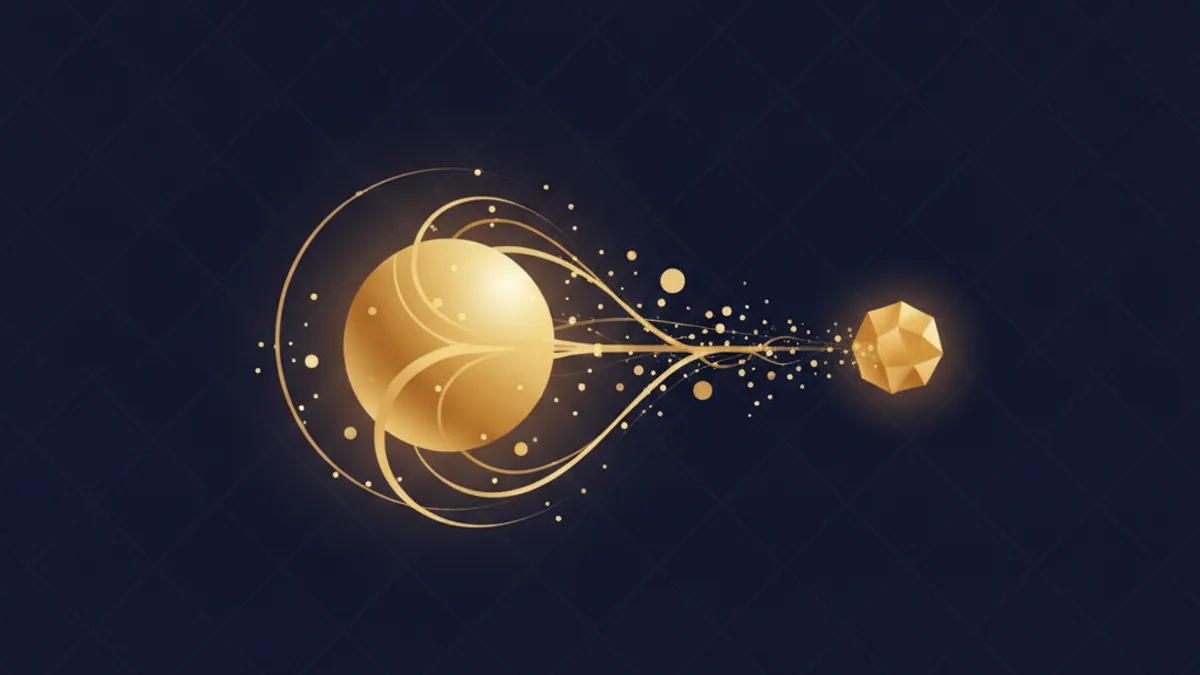
Every time an AI assistant answers instantly on your phone, behind that speed there is often a piece of work that rarely gets told: making a model smaller and lighter without losing too much of what it knows. The technique that makes this possible is called distillation, and it is one of the reasons AI moved from labs full of huge machines to the devices we carry in our pockets. Understanding how it works is not a detail for insiders: it helps you read a world where there is no single model, but many models with different trade-offs.
What it means to distill a model
The core idea is surprisingly intuitive. You start with a large, very capable model — the teacher — and use it to train a smaller model — the student. Instead of letting the small model learn only from raw data, you let it watch how the large model responds: not just the final answer, but the way it spreads its confidence across the various options. It is a bit like an apprentice who does not only copy the master's solution, but absorbs the reasoning, the hesitations, the weight given to one option over another.
This detail matters more than it seems. When the large model, facing a question, is not one hundred percent sure but leans toward an answer while leaving some alternatives open, it is passing along rich information: not only what is right, but how much and how much not. The student learns precisely from this gradation, and that is why it inherits most of the teacher's behavior while having far fewer parameters. It does not memorize individual examples: it learns to imitate the function. And it is exactly this transfer — from large to small — that lets you have fast, cheap models able to run on a phone or answer thousands of requests per second without prohibitive costs.
What you gain and what you leave behind
The gain is obvious: a distilled model is faster, uses less energy, costs less to run and can live close to the user instead of in a distant data center. For most everyday tasks — summarizing a text, classifying a request, answering frequent questions — the gap versus the large model is minimal, and the speed is worth the little you give up.
But something is always left behind. Compressing a model means giving up some of the nuance: rare cases, long chains of reasoning, problems that require holding many steps together before reaching a conclusion. A small model tends to do very well on the ground it was trained for and to grow more fragile at the edges, where the teacher's depth would be needed. It is the classic AI trade-off: speed or completeness, lightness or breadth. There is no model that wins at everything; there is the right model for that task, in that moment, at that cost. Anyone building a serious AI product does not pick "the best" in absolute terms, they pick which trade-off makes sense case by case.
Not the model, but the models
Here you can see where the AI world is heading. For years the race looked like a contest to build the largest, most powerful model possible. Distillation tells a different, more mature story: alongside the large models an entire ecosystem of smaller, specialized models is emerging, each with its own balance of speed, cost and capability. Not a single winner, but a family of tools with different characters, each the child of a trade-off decided upstream.
And this is exactly why relying on a single model, large or small, is a risky bet. Each one carries the limits of the trade-off it was born with: one is fast but shallow on a complex problem, another is deep but slow, another excels in one domain and flounders in the one next door. If you ask a single question to a single AI, you have no way of knowing whether the answer you get bears the marks of that trade-off. The real leap is not finding the perfect model — it does not exist — but putting several complementary perspectives on the same problem and reading where they converge and where they drift apart. Where several models, with different histories and trade-offs, reach the same conclusion, you have a solid point. Where they diverge, you have found exactly the spot where one of their trade-offs is weighing on the answer. And keeping this comparison together in an orderly way is the job of a meta-layer, a layer that orchestrates the flow for you and leaves the choice to you.
AI Arena is the platform that compares several AI identities with different perspectives on the same problem, lets you select the most useful answers and uses an Orchestrator to carry you to the next step, it does not replace your decision, it helps you make it with more awareness. You choose the team and hand the same problem to 7 complementary specialists: each tackles it in its own way and writes its own answer, so you see at once where the readings match, and you have a solid footing, and where they drift apart, and you have the spot worth a closer look. You select what holds, the system refines and digs deeper, and the Orchestrator keeps the flow together all the way to the final report. In a world made of many models and many trade-offs, you do not need to guess which one is best: you need to see them work side by side on the same problem.
Join Arena.
FAQ
What is AI model distillation?
Distillation is a technique for transferring what a large, capable model knows, called the teacher, to a smaller model called the student. Instead of letting the small model learn only from raw data, you let it watch how the large model responds: not just the final answer, but the way it spreads its confidence across the various options. It is like an apprentice who does not simply copy the master solution but absorbs the reasoning and the weight given to one option over another. The result is a model with far fewer parameters that inherits most of the behavior of the large one.
Why is a distilled model faster and cheaper?
Because having far fewer parameters means needing less computation to produce each answer. A smaller model takes up less memory, uses less energy and can run close to the user, for example directly on a phone instead of in a distant data center. That makes it well suited to answering instantly and handling a huge number of requests at once without prohibitive costs. It is one of the reasons AI moved from the large machines of the lab to the devices we carry in our pockets.
What do you lose when you distill a model?
Compressing a model almost always means giving up some of the nuance. A distilled model tends to do very well on the tasks it was trained for, but grows more fragile at the edges: rare cases, long chains of reasoning, problems that require holding many steps together. It is the classic AI trade-off, speed or completeness, lightness or breadth. For most everyday tasks the gap versus the large model is minimal and the speed is worth the little you give up, but on complex problems the difference can matter.
Is a large model or a small distilled one better?
There is no answer that holds every time, because there is no model that wins at everything. A large model is deeper but slow and expensive, a distilled one is fast and cheap but shallower on hard problems. The right choice depends on the task, the moment and the acceptable cost. Anyone building a serious AI product does not pick the best in absolute terms, they pick which trade-off makes sense case by case. Distillation does not replace large models, it adds a family of tools with different characters.
How does AI Arena help in a world of many different models?
AI Arena is the platform that compares several AI identities with different perspectives on the same problem, lets you select the most useful answers and uses an Orchestrator to carry you to the next step, it does not replace your decision, it helps you make it with more awareness. You choose the team and hand the same problem to 7 complementary specialists: each tackles it in its own way and writes its own answer, so you see at once where the readings converge, and you have a solid point, and where they diverge, and you have found the spot where one model trade-off is weighing on the answer. You select what holds, the system refines and digs deeper, and the Orchestrator keeps the flow together all the way to the final report.
Topics