Section
#Tecnologia
How AI systems are built: architectures, models, orchestration and the patterns that are emerging.
36 · Articles in this section

Model parameters: what the billions really mean
Talk about an AI model and the number always shows up: seven billion parameters, seventy, hundreds. The number makes headlines because it is big, and the mental shortcut is instant: more parameters, better model. It is a convenient read and almost always misleading. This piece looks at what a parameter actually is, why size tells you far less than it seems, where the count genuinely matters and where it is nearly useless for anyone who uses AI to decide and get work done — up to the point where the real question is no longer how big a model is, but which perspective you need on a problem, and that is where the argument leads to Arena.
AI model parameters: what those billions really mean
Every time a new AI model ships, the first thing you read is a number: billions of parameters, as if it were an engine displacement. But what are these parameters really, and does that number actually say what it seems to say? This piece explains what a parameter is without the jargon, why bigger does not mean more accurate, what really matters beyond a model size, and why the smart move is not chasing the biggest model but comparing complementary perspectives on the same problem — which is exactly where Arena comes in.

Few-shot prompting: how a handful of examples steer an AI model
There is a simple way to make an AI model understand what you actually want, and it does not run through longer instructions: it runs through a couple of examples. Showing the model two or three cases of what you consider well done — the question-answer pair, the format, the tone — steers it far more than any description in words. This technique is called few-shot: a few examples inside the request that shape what the model writes next. It is one of the most practical levers for working well with AI, and it explains why the same model sometimes jumps from generic answers to on-target ones without changing a single line of instruction. But it has a limit no example solves on its own, and that is where the conversation leads to Arena.
Mixture of Experts: how an AI model fires only the right experts
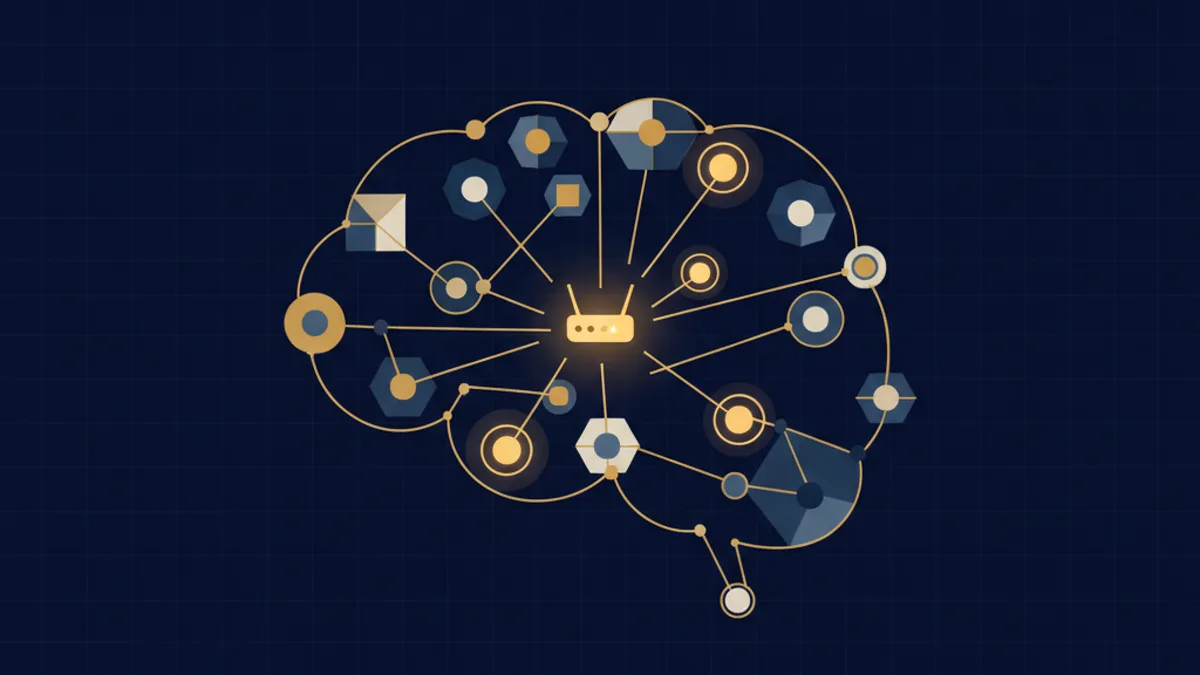
For years the intuition about AI models was simple: bigger means smarter. But there is a hidden cost, because every answer lights up the entire model even for the most trivial question. Mixture of Experts breaks that link: it splits knowledge into many specialized sub-networks and activates only a few at a time, chosen by an internal router. So a model can be huge in total knowledge and light in what it uses per answer. Yet it stays one model, with one view of the problem: the router picks among experts that share the same training. For decisions that matter, the limit is not efficiency, it is the single perspective, and that is the jump that leads to Arena.

Multi-step AI pipelines: how separate steps combine into one flow
When people picture AI they usually imagine a single move: one question, one answer. But systems that do real work rarely operate that way. Behind a useful answer there is almost always a sequence of steps, each taking the output of the previous one and pushing it further. It is called a multi-step pipeline, and it is how a complex task gets broken down, tackled piece by piece, and rebuilt into something solid. Understanding how a flow is composed explains why some AI systems deliver reliable results and others do not, and where comparing several complementary perspectives makes every step stronger.

Semantic Search: How AI Understands Meaning, Not Just Words
For decades, searching meant matching words: you type a term, the system returns the documents that contain that exact term. Semantic search changes the rules. It doesn't chase words, it chases meaning: it grasps that a question phrased one way and an answer written another way can be about the same thing even without sharing a single word. Behind this leap sits a different way of representing language, one that lets AI find what you mean and not just what you type. Understanding how it works helps you read the systems you use every day, and see why comparing several perspectives is still the step that matters.

Fine-tuning: how to adapt an AI model to a specific domain
A language model starts out as a generalist: it knows a little about everything, but nothing about your industry, your language, your rules. Fine-tuning is the technique that retrains an existing model on targeted examples so it becomes more competent and more consistent in a specific domain. Understanding what it is, when it actually pays off, and how it differs from simply feeding the model more context is the way to avoid expecting from it what it cannot deliver, and to see why even a specialized model gains when it is set against different perspectives.

Uncertainty: how an AI model signals (or hides) when it does not know
An AI assistant always answers, even when it does not know: it is not built to say I do not know, it is built to produce a fluent, confident text anyway. The uncertainty is there, but it stays hidden under a uniform tone that never separates a solid answer from an invented one. Here is how a model signals or hides what it does not know, what confidence and calibration actually mean, and why comparing several complementary perspectives is what finally makes that uncertainty readable.

The System Prompt: What Really Steers an AI Model
When you write to an AI assistant, you never start from a blank page. Before your question arrives, the model has already been handed a set of instructions you never see. It is called the system prompt, and it is the layer that decides who the model is, how it writes, and what it can do. Grasp it, and you understand why two AIs answer the same question so differently.

Distillation: how a smaller, faster AI model is born
Behind an AI assistant that answers instantly on your phone there is often distillation: the technique that transfers what a large model knows to a smaller, lighter one. How it works, what you gain and what you leave behind, and why it points to a world of many models rather than a single one.

Tokenization: how an AI model really reads text
When you read a sentence you split it into words without noticing, and you build meaning on top of those pieces. An AI model does something similar before it understands anything, but the pieces it breaks text into are not our words: they are tokens, fragments that can stand for a whole word or just part of one. That first cut has a name, tokenization, and it is the invisible move that everything else depends on: how much a response costs, how much text the model can hold at once, where it stumbles. Understanding how a model splits text takes apart the idea that it reads the way we do, and shows why a single way of cutting is also a single point of view. That is exactly where the value of comparing several perspectives comes from.

Attention: How an AI Model Decides What Matters in a Sentence
When you read a sentence, you don't give every word the same weight. Some slide past you, others make you stop, and you get the meaning mostly from how you connect them. An AI model does something similar, and it has a precise name: attention. It is the mechanism that lets it, while processing text, decide which words matter most for interpreting the others, and hold the meaning together instead of reading word by word in a flat line. Grasping this idea clears up a common mistake, the belief that the model reads the way we do. It doesn't read: it weighs. And the way it weighs words is also its deepest limit, because it is a single way of deciding what counts. That is exactly why putting several perspectives side by side beats trusting one reading alone.

AI Ensemble: Why Multiple Models Beat a Single Answer
Asking one model means betting on one way of seeing the problem: if that view has a blind spot, you inherit it whole. The idea of an ensemble, which in AI systems means combining several models instead of picking just one, exists for exactly this reason: an answer built on multiple complementary perspectives is almost always more robust than a single one, because the isolated errors of one model get exposed by the others. It is not an average that flattens everything, but a comparison that reveals where several views converge, and therefore hold, and where they diverge, and therefore deserve attention. It is the shift from 'what one AI says' to 'the most solid answer that several AIs, compared side by side, can help you see'.

Embeddings: how an AI model organizes meaning
When you type a sentence into an AI system, something invisible happens before it even answers: your words are turned into numbers, into coordinates inside a space. This step has a name, embedding, and it is one of the building blocks under almost everything AI can do today, from search by meaning to the ability to connect distant ideas. This is not an insider detail: grasping, in broad strokes, how a model lays concepts out in this space helps you see why it nails some things and fails others. The model does not know the world the way you do, but it holds a map of meaning, and that map explains a lot of its behavior. It is worth looking inside, without jargon, so you can use AI with more awareness.
Temperature: Why the Same Question Gets Different AI Answers
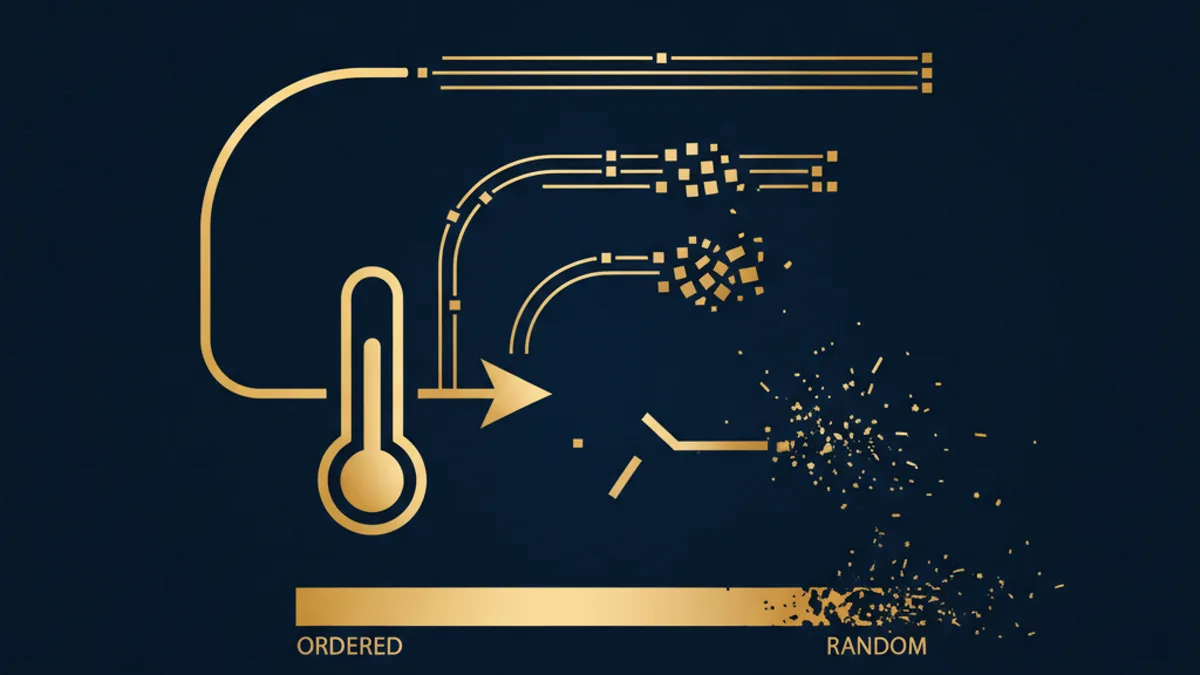
Ask an AI system the same question twice and you can get two different answers. It is not a bug or a glitch: it is a design choice, controlled by a parameter called temperature. Temperature sets how much freedom the model gives itself when picking the next word: low, and answers become predictable and repeatable; high, and they become varied and creative but less stable. Understanding this parameter suddenly explains a lot of things that seem strange: why a model sometimes makes things up, why two tries do not match, why the same request works better one moment and worse the next. This is not a detail for engineers: it is the reason you cannot judge an AI system on a single answer, and why comparing multiple perspectives matters more than one lucky attempt.

The Knowledge Cutoff: What an AI Model Cannot Know
Every AI model has an invisible boundary beyond which it has learned nothing: the date up to which it was trained, the so-called knowledge cutoff. Anything that happened after that date simply does not exist for the model. And next to this time boundary there are two more, even trickier: the model does not know your private context, and it does not know what it does not know. The result is a system that writes with the same confidence about what it learned well and what it ignores entirely. Understanding where these boundaries fall is not a technical detail: it is the difference between using a model with real awareness and blindly trusting an answer that sounds right but rests on nothing.

Guardrails: How to Keep an AI System on the Rails
Left on its own, a language model can write almost anything: that is both its strength and its weakness. Guardrails are the set of rules, checks and constraints that keep an AI system on the rails, doing what it should and staying away from what it should not. They are not a detail for specialists: they are the difference between a system you can trust to work with and an unpredictable generator that forces you to check every line. Understanding what they are, where they belong and why a single guardrail is never enough is what separates a shiny toy from a tool you can build decisions on.

Multimodality: when AI brings together text, images and voice
For years, AI was mostly a matter of text: you typed, it read, it answered. Multimodality breaks that boundary: a model that handles words, images, audio and voice together, moving closer to the way we actually perceive the world. It is a concrete technical leap that reshapes workflows and opens uses that were unthinkable until recently. But the more a model fuses the senses, the easier it is to forget a limit that stays put: even the most complete model still gives you a single perspective on the problem. Understanding what multimodality changes, and what it does not, is the right way to use it without fooling yourself.

The context window: what an AI model can actually see
When you write to an AI you picture it listening like a person would, with the whole conversation firmly in mind. In reality every model works inside a context window: a limited space that holds what it can consider at that moment. Everything inside the window the model sees; everything left outside simply does not exist for it. Understanding how this space works changes how you use the tool: it explains why it sometimes seems to forget, why a bigger window does not equal more understanding, and why what you choose to put inside it matters more than its size.

Meta-layer: what holds a multi-AI workflow together
When you put several AIs to work on the same problem, the hard part is not getting the answers: it is holding them together. Five sharp voices each writing in its own corner stay five monologues until someone lines them up, sees where they agree and where they clash, and decides what to carry forward. If that someone is you, by hand, the advantage of multiple perspectives drains away into the work of recombining them. The meta-layer is the upper level that does exactly this: it takes separate answers and turns them into a readable flow that moves toward a decision. It is not a cosmetic detail, it is the architecture that decides whether having more AI actually helps you or just buries you.

Structured comparison versus disconnected, separate conversations
When a decision matters, the usual reflex is to ask the same question to several different AIs: open a few tabs, paste the question, collect the answers. It looks like a comparison, but it is not. These are separate, disconnected conversations, each sealed inside its own context, unable to see or talk to each other. The work of pulling them together — aligning the points, spotting where they agree and where they diverge, deciding what to keep — falls entirely on you, by hand, exactly when you are most tired. A structured comparison is a different thing: same question, same context, answers placed side by side and readable next to each other, with a meta-layer that holds the flow together. The difference is not cosmetic, it is architectural, and it changes the quality of the decision that comes out.

Interoperability: why you should not lock yourself into one AI model
Picking an AI model is easy to do and hard to undo. Over time your workflows, your data and your habits all start running through a single system, and the day a better one ships, moving costs far more than you expected. Interoperability is the ability to make different models work together and swap between them without being trapped inside just one. This is not a technical detail for specialists: it is strategic freedom, protection against vendor lock-in and, above all, the condition that lets you compare multiple perspectives instead of trusting only one. Understanding why you should not tie yourself to a single model is the first step toward using AI from a position of strength.

AI Reasoning: What Happens When a Model Thinks Out Loud
The latest AI systems have learned to show more than the final answer: they lay out the path that leads to it, step by step. This is chain-of-thought reasoning. Exposing the intermediate steps often improves quality on hard problems and makes the path checkable, but those steps are still generated text, not a guaranteed record of what happens inside the model. Knowing the difference between reasoning as a process and reasoning as an explanation is the key to trusting outputs the right amount. And once you can compare reasonings side by side, they stop being a monologue to accept and become material to examine.

AI Hallucinations: Why They Happen and How Comparison Exposes Them
It happens to anyone who uses an AI system: at some point the answer sounds perfect, confident, well written, and that is exactly why you trust it. Then you find out the figure does not exist or the citation is made up. This is what we call hallucination, and it is not an occasional glitch: it is a structural feature of how these technologies work. Understanding why it happens is the first step to not being fooled, and putting several complementary perspectives side by side is the most robust way to make it visible before it turns into a bad decision.

Routing and Composition: How Multiple AI Models Can Work Together
For years we kept asking which AI model is the best, as if there were a single one to use for everything. The people who build AI systems stopped thinking that way: no model is the best at every task. Two ideas emerged to get past the problem, routing that sends each request to the most suitable model and composition that puts several models to work on the same problem. Here is how they work, why the second matters more than the first, and why comparing perspectives beats a hidden choice.

Agentic Workflows: When AI Stops Answering and Starts Acting
For years we treated AI like an oracle: one question, one answer, and all the work of turning it into something useful was left to us. The most advanced systems no longer stop at the answer: they take a goal and try to reach it, one step at a time. This is the agentic workflow, maybe the deepest shift of recent years. Here is what it means, why it is hard, and why more autonomy makes clashing perspectives even more valuable.
Evaluating an AI System: What Evals Are and How You Actually Measure Answer Quality
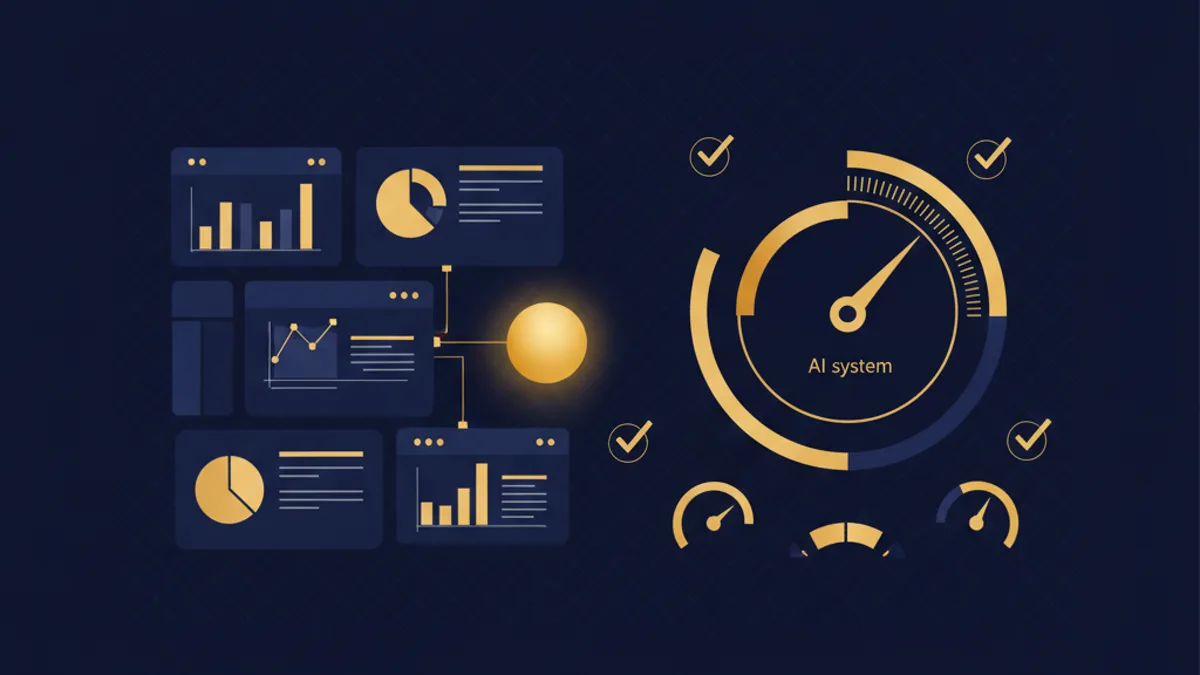
A slick demo tells you almost nothing about how reliable an AI is on real work. What separates the impression from the substance is evals: the structured way to measure how well a system answers, and where it fails. Here is what they are, why they have become the core of building serious AI, and how the same logic changes who you decide to trust.

Specialized or Generalist AI Models: A False Dilemma
When picking an AI tool, people often ask whether a generalist that does a bit of everything beats a specialist trained deeply on one domain. It sounds like a technical question, but it shapes the quality of your everyday work: breadth versus depth, with hidden trade-offs on both sides. And today it may be the wrong question entirely.

Memory and Long Context in AI Workflows: Remembering Is Not Understanding
Every conversation with an AI starts from scratch: the model only sees what fits inside its context window. Widening it and adding memory changed what we can ask for, but more context does not mean more understanding — and a long memory built on a single voice does not fix its mistakes, it makes them consistent. The real edge comes from holding several perspectives together, not from remembering more.

Grounding and RAG: Giving AI Answers Roots
An AI model writes from what it memorized during training: powerful knowledge, but closed, frozen at a point in time, and prone to filling gaps with plausible but unverified answers. Grounding and RAG anchor those answers to real, checkable sources, giving roots to what would otherwise float free.

Complementary specialists: a team of agents for complex decisions
Having many AI models isn’t enough. We need structurally distinct roles: analyst, creative, critic, pragmatist, visionary, contrarian, and synthesizer. Useful diversity isn’t just for show; it’s about role-prompt engineering. What changes when a complementary team works together on the same problem?

The Orchestrator: the architecture that sets Arena apart from single-instance AIs
A single AI conversation involves only one voice at a time. A system that is multi-agent and lacks coordination is nothing more than parallel noise. The Orchestrator—is the layer that brings multiple responses into dialogue, highlights points of agreement and disagreement, writes the final report, and proposes the next prompt. What changes with a layer of intelligence that coordinates?

Agile Decision-Making: AI Redesigned for Daily Operations
Decisions don’t wait for you to sit down at your desk. They happen on the go—between meetings, on the subway, or while waiting in line at a coffee shop. Most AI tools are designed primarily for desktops, with responsive adaptations. Arena has reimagined the user experience for touch and workflow. Here’s what that means for decision-makers.

Tired of working with so many browser tabs? Ask multiple AIs at the same time
A separate tab for each AI, copy-and-paste for comparison, and disjointed, disconnected conversations. AI Arena consolidates the workflow into a single view, with multiple complementary agents working in parallel on the same issue.

Agents with distinct personalities: specialized teams for in-depth analysis
Analyst, Creative, Pragmatist, Critic, Visionary, Devil’s Advocate, Synthesizer: In “AI Arena,” agents fill distinct cognitive roles and come together in ready-to-use teams for every decision-making context.

The advantage of parallel responses: why a single AI limits you
A single artificial intelligence system provides only a single perspective. Comparing multiple complementary agents in parallel reduces errors, reveals hidden biases, and enriches the decision-making process.
All topics