Evaluating an AI System: What Evals Are and How You Actually Measure Answer Quality
A slick demo tells you almost nothing about how reliable an AI is on real work. What separates the impression from the substance is evals: the structured way to measure how well a system answers, and where it fails. Here is what they are, why they have become the core of building serious AI, and how the same logic changes who you decide to trust.
by Redazione AI Arena
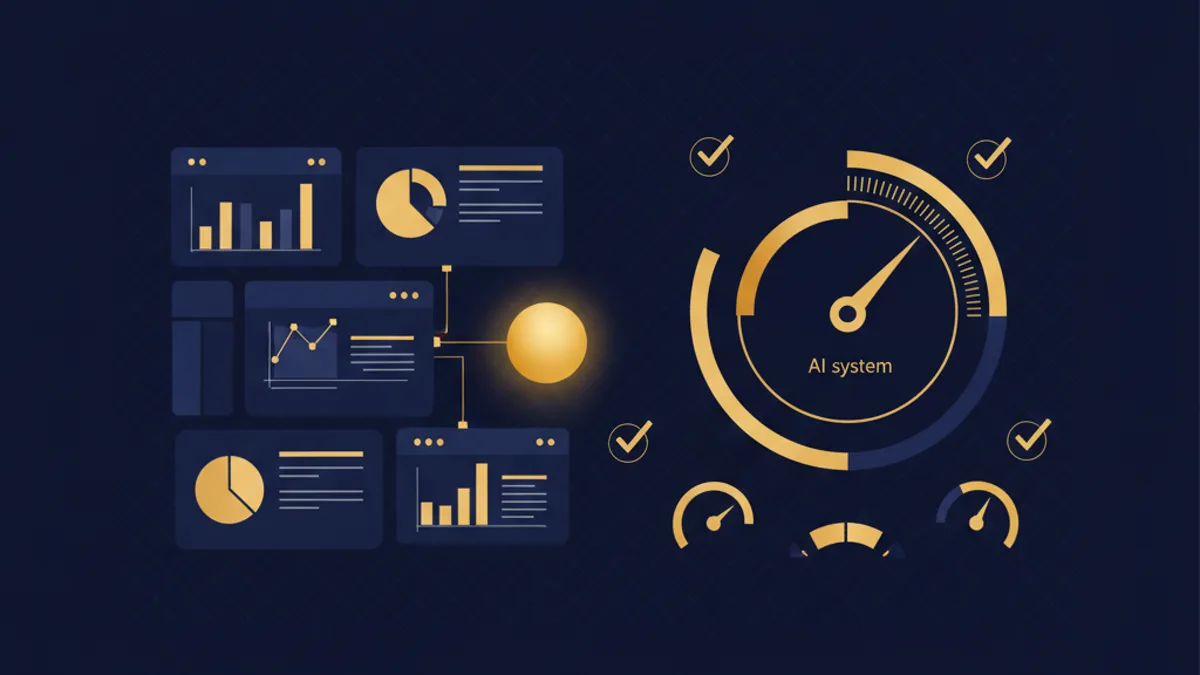
There is a moment, when you try a new AI, when you are impressed. You ask a question, you get a clean and brilliant answer, and for a second you assume it will work like that on everything. That moment is also the most expensive trap in the whole field: a successful demo tells you almost nothing about how reliable a system is on real work. It shows the best case, not the average behavior.
What separates the impression from the substance is a discipline that anyone building serious AI now treats as the heart of the craft: evals, the structured evaluation of how well a system answers, and where it fails. It is the least spectacular topic in artificial intelligence and, not by chance, the one that separates the toys from the tools you can rest a decision on.
What evals are, in plain terms
Imagine having to judge not a single lucky answer, but an entire system. You cannot do it by feel. You need many cases, chosen because they represent real work — including the awkward questions, the imperfect data, the niche corners — and you need a repeatable way to check how the system performs on each one. That is an eval: the equivalent of an industrial stress test applied to an AI.
The difference from a demo is right there. A demo is an anecdote; an eval is a measurement. A demo answers the wrong question — can it work? — when the one that matters is how often it works, and where it stops. A language system generates the most plausible text: on a curated example it almost always looks excellent. The truth shows up in the average cases and the edge cases, and that is exactly where an eval points the spotlight.
The most important point is also the most counterintuitive: the goal of an eval is not to produce a high score. It is to make the system **known**. Knowing where an AI is solid and where it breaks is worth more than any reassuring number, because it tells you in advance where to keep a human watching instead of finding out after the damage is done.
Why measuring quality is so hard
For some tasks, evaluation is simple: there is a right, verifiable answer, and you can measure accuracy automatically. A calculation is either correct or wrong. But most real work is not that clean. When you ask an AI to summarize a document, set a strategy or explain a complex topic, quality is blurry: clarity matters, usefulness matters, the absence of errors, the faithfulness to sources. No single number captures all of that.
This is the challenge running through all current research. Measuring an open-ended answer requires explicit criteria — what makes this answer good? — and often a judgment that goes beyond automation. A well-worn path is to use another model as the judge, an AI grading the answers of another AI. It helps you scale, but it moves the problem: who evaluates the evaluator? A machine measuring another machine can inherit the same blind spots, and convincing fluency can trick it into mistaking a polished answer for a correct one.
That is why the strongest evaluations never trust a single lens. They combine automatic metrics where a verifiable truth exists, human judgment where common sense is needed, and — more and more often — the comparison of several different answers on the same case. Because a reliable way to tell whether an answer holds up is to see what perspectives that reason differently write on the same problem.
Where it is heading: from lab evaluation to living evaluation
For years evals were a matter for the people building the models: tests run in the lab, far from the people who actually use those systems. The interesting direction is that this logic is moving into the daily work flow. No longer just is this model good in the abstract?, but is this answer, here, now, for my problem, reliable?
It is a shift that concerns everyone, not just engineers. When you query an AI in separate, disconnected conversations, you get isolated opinions that nobody ever puts to the test: you have no way to assess them except by trusting the tone. What is missing is exactly what makes an eval robust — the pushback. The revolution is not an AI that never makes a mistake, because it does not exist; it is a system built so that its weak spots become visible to whoever uses it, at the moment they use it.
Here the comparison of complementary perspectives becomes a form of continuous evaluation. The points where several models converge are usually the most solid; the points where they diverge are a map that shows where the ground is uncertain and where human judgment is needed. Disagreement, in this frame, is not a flaw to hide but the most useful signal: it tells you where to focus attention instead of assessing everything blind.
Comparison as the eval you run without noticing
Seen this way, evaluation stops being a technical exam reserved for insiders and becomes part of the very way you query an AI. The useful question is no longer is this answer right?, but against how many other perspectives did I test it before trusting it?
That is the logic of AI Arena. Instead of leaving you with a single confident voice, it lets you pick the team: 7 complementary specialists that write their answers on the same problem, each from their own angle. You select the most useful ones, compare their agreements and disagreements, and a meta-layer — the Orchestrator — holds the work together into a final report that carries you to the next step. The divergences that surface are exactly the points where a good eval would tell you to look closer.
AI Arena is the platform that compares multiple AI identities with different perspectives on the same problem, lets you select the most useful answers and uses an Orchestrator to carry you to the next step. It does not replace your decision, it makes you take it with more awareness.
Evaluating an AI, in the end, is deciding how much trust to give it. And you measure that better when you have more than one voice to compare.
Enter Arena.
FAQ
What are evals for an AI system?
Evals are the structured way to measure how well an AI system answers a task, and where it fails. Instead of relying on a few lucky attempts, you gather a set of cases that represent real work and check, in a repeatable way, how the system performs on each one: where it is solid, where it breaks, how much it improves or degrades when you change something. They are the equivalent of a stress test, and they turn an impression into a measurement.
Why is a demo not enough to judge an AI?
Because a demo shows the best case, picked on purpose to work. A language system generates the most plausible text, so on a curated example it almost always looks brilliant. Real work, though, is made of ambiguous cases, imperfect data and niche questions, and that is where the difference shows. Evals exist precisely to measure average behavior and edge cases, not the most photogenic moment.
How do you measure the quality of an AI answer?
It depends on the task. For some things there is a verifiable right answer, and you can measure accuracy automatically. For most real work, quality is blurry: clarity, usefulness, absence of errors, faithfulness to sources. Here you need explicit criteria and often human judgment or a comparison across several answers, because no single number captures what a good answer means.
Do evals eliminate an AI mistakes?
No, and no method does. Evals do not make a system perfect: they make it known. They tell you where an AI is reliable and where it is worth keeping a human in the loop, so you do not find out after the damage is done. The value is not a reassuring score but an honest map of the weak spots on which to calibrate how much trust to give each answer.
How does AI Arena help you evaluate AI answers better?
AI Arena compares multiple AI identities with different perspectives on the same problem and lets you pick the most useful answers. By comparing 7 complementary specialists, agreements and disagreements become a living evaluation: the points where perspectives align are the most solid, the ones where they diverge tell you where to look. An Orchestrator holds the work together into a final report, and you stay in charge of deciding with more to go on.