The context window: what an AI model can actually see
When you write to an AI you picture it listening like a person would, with the whole conversation firmly in mind. In reality every model works inside a context window: a limited space that holds what it can consider at that moment. Everything inside the window the model sees; everything left outside simply does not exist for it. Understanding how this space works changes how you use the tool: it explains why it sometimes seems to forget, why a bigger window does not equal more understanding, and why what you choose to put inside it matters more than its size.
by Redazione AI Arena
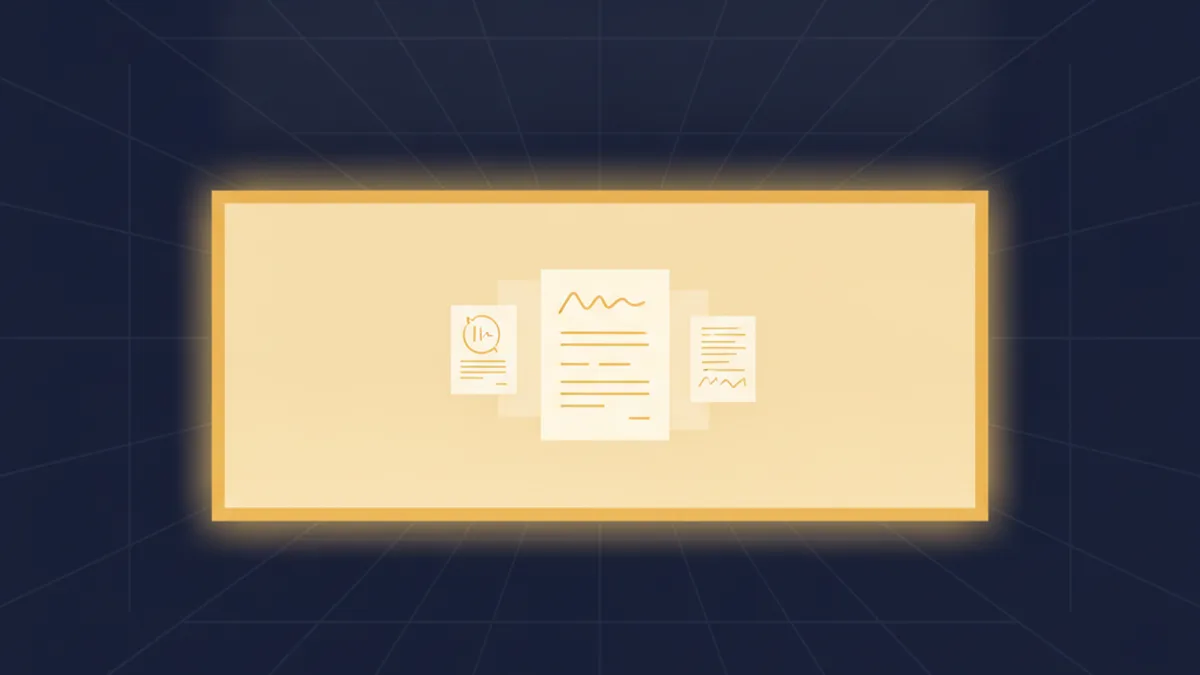
When you write to an AI you picture it listening like a person would, with the whole conversation firmly in mind. It is a useful illusion, but an illusion all the same. Every model works inside a context window: a limited space that holds everything it can consider at that precise moment. Your question, the instructions, the documents you passed to it, the answer it is writing: it all lives in there. And the rule is clear: what sits inside the window the model sees, what stays outside does not exist for it.
Understanding this space is not a technical detail for insiders. It is the key that explains the behaviors that look like whims: why the AI sometimes recalls a detail from twenty messages ago and other times seems to have forgotten what you told it two lines up. It is not distraction. It is a matter of what managed to get into the window, and what dropped out.
What this space really is
Picture a desk of fixed size. You can lay on it the sheets you need to work, but only up to a point: when it is full, to add something you have to remove something else. The context window works the same way. The model does not "have in mind" your whole history with it: it only has in front of it what is on the desk right now.
Everything you write takes up space, measured in units called tokens (pieces of a word). Your question, the context you give it, the examples, and even the answer it generates: it all consumes the same desk. That is why, in a very long chat, the first exchanges can slide out of the available space as new ones are added. The model did not delete them by choice: it simply no longer has them in front of it. If something matters and you take it for granted, you risk it having already fallen outside the window.
More space does not mean more understanding
The race of recent years has pushed windows to become enormous: entire books, archives of documents, very long conversations that all fit inside. It is real progress. But it hides a misconception worth dismantling: a bigger window does not make the model smarter. It only makes the desk wider.
How good the model is at connecting information, reasoning over it, not losing the thread, depends on its abilities, not on the size of the space. And there is a counterintuitive effect: the more material you pile into the window, the more you risk diluting what matters. With too much in front of it the model can spread its attention thin, giving weight to marginal details and less to the information that truly matters. Extra room is an advantage only if you fill it with the right things. Filling it with noise is like searching for an important note on a desk buried under useless sheets.
Context is a choice, not a container
Here is the point that shifts the work to the right place: the context window is not a bucket to fill, it is a selection to curate. The quality of the answer depends less on the final question and much more on what you put into the space before asking it. Goal, constraints, relevant data, a couple of examples that clarify what you want: this is context that works. Everything else is ballast that takes up room and distracts.
That is why, more and more, the value moves upstream: not to the model itself, but to how you set up what you place in front of it. A clean, focused context yields solid answers even with an ordinary model; a muddled context wastes even the best model. The AI world is realizing it: the game is not played only on ever-bigger models, but on how well we can give them the right roots to answer. And this raises an uncomfortable question: how do I know whether the context I gave was really enough?
The same context, more perspectives
With a single AI this question goes unanswered. You get a clean, self-assured text, but you have no way to tell whether that confidence comes from a solid context or from a missing piece the model filled in by guesswork. You lack the point of comparison: a single voice never tells you how enough what you gave it was.
The picture changes when the same context is passed to several complementary perspectives at once. If several AI identities, looking at the same material from different angles, converge, you have a signal that the context held up. If they diverge sharply, that disagreement is valuable information: it often points you to exactly the spot where a piece is missing, or where the question was ambiguous. For this to work, though, you need something that holds the flow together: answers side by side but disconnected are worth no more than five open tabs. You need a meta-layer, an Orchestrator that aligns the perspectives, gathers your selections and carries the work forward.
This is exactly the trade-off we built. AI Arena is the platform that puts several AI identities with different perspectives on the same problem side by side, lets you pick the most useful answers, and uses an Orchestrator to move you to the next step; it does not replace your decision, it helps you make it with more awareness. You choose the team, pass the same context to 7 complementary specialists and read the answers side by side: you see at once what that context lets you assert with confidence and where, instead, it needs to be filled in. You select what holds up, the Orchestrator keeps the flow together up to the final report, and you take home not just an answer, but a measure of how well founded it was.
The context window is the space in which the AI sees your problem. **Join Arena** and fill it with perspectives, not just words.
FAQ
What is the context window of an AI model?
The context window is the workspace within which a model considers information while answering you. It holds your question, the instructions you gave it, the pieces of conversation or documents you passed to it, and the answer it is building. Everything inside this space the model keeps in mind at the same instant; everything left outside does not exist for it in that moment. That is why it sometimes seems to remember everything and other times seems to have forgotten: it is not a lapse of attention, it is a matter of what managed to fit inside the window.
Does a bigger context window make the model smarter?
No, they are two different things. A bigger window means the model can keep more material in front of it at once: a whole document instead of a summary, a long conversation with no cuts. But how good it is at using that material, connecting it and reasoning over it, depends on its abilities, not on the room available. In fact, the more you cram in, the more you risk diluting what matters: the model can spread its attention across too much information and give less weight to what is truly relevant. Extra room helps only if you fill it with the right things.
Why does the model sometimes forget what I told it earlier?
Because that piece of conversation dropped out of the context window, or never made it in. In a long chat the first things you wrote can fall outside the available space as new ones pile up, and the model stops seeing them. It did not delete them on purpose: it simply no longer has them in front of it. So if a piece of information matters, it is worth repeating it or putting it back into context when needed, instead of assuming the model keeps it the way a person would.
How do I choose what to put in the context to get better answers?
The criterion is relevance, not quantity. Put in what actually helps answer: the goal, the constraints, the relevant data, the examples that clarify what you want. Strip out the noise, meaning all the material that does not change the answer but takes up room and distracts. Setting up the input context well matters more than almost any other choice: a clean, focused context yields solid answers even with an ordinary model, while a muddled context wastes even the best model. That is the real work upstream, the part you should not leave to chance.
How does AI Arena help make better use of the same context?
AI Arena is the platform that puts several AI identities with different perspectives on the same problem side by side, lets you pick the most useful answers, and uses an Orchestrator to move you to the next step; it does not replace your decision, it helps you make it with more awareness. In practice you choose the team and pass the same context to 7 complementary specialists: each looks at the same material from a different angle and writes its own answer. This way you see at once what that context lets you state with confidence, where the perspectives converge, and where instead a missing piece makes the answers diverge. You select what holds up and the Orchestrator keeps the flow together up to the final report, helping you understand not just the answer, but whether the context you gave was enough.