Multimodality: when AI brings together text, images and voice
For years, AI was mostly a matter of text: you typed, it read, it answered. Multimodality breaks that boundary: a model that handles words, images, audio and voice together, moving closer to the way we actually perceive the world. It is a concrete technical leap that reshapes workflows and opens uses that were unthinkable until recently. But the more a model fuses the senses, the easier it is to forget a limit that stays put: even the most complete model still gives you a single perspective on the problem. Understanding what multimodality changes, and what it does not, is the right way to use it without fooling yourself.
by Redazione AI Arena
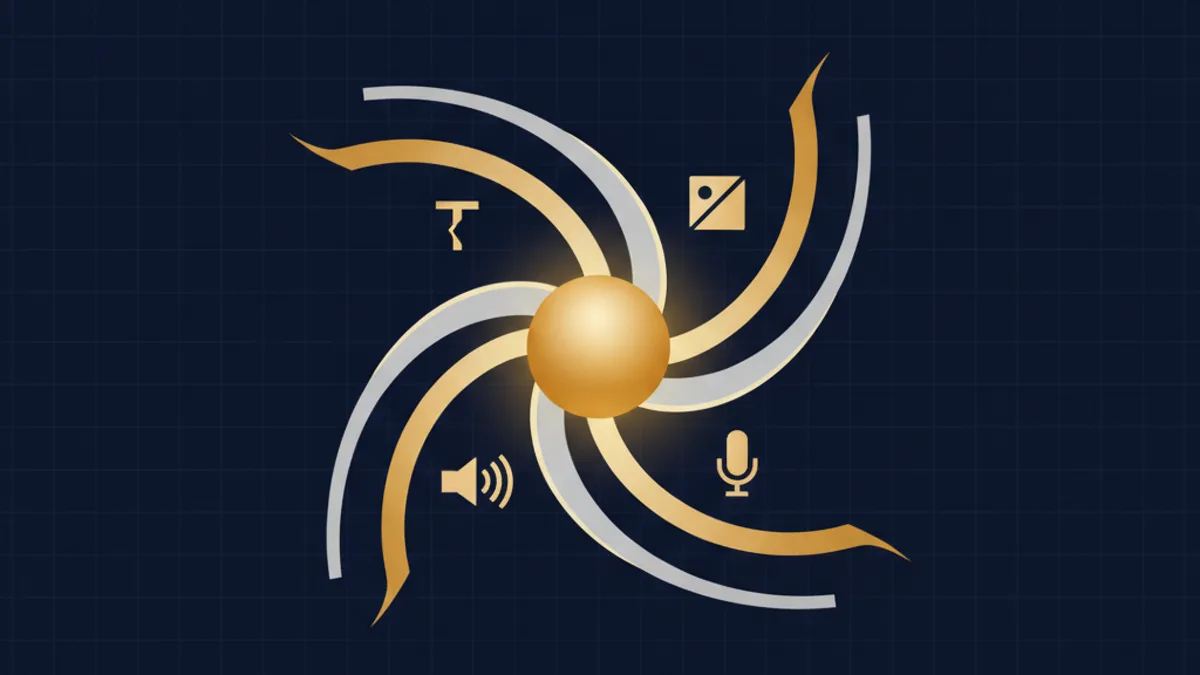
For a long time, using AI meant, in practice, typing. You keyed in a question, the model read your words and answered with more words. Everything went through text: if you had a photo, a chart, a voice note, you first had to translate them into words to feed them to the system. Multimodality breaks that boundary. And it is not a technical detail for insiders: it is one of the changes that brings AI closest to the way we actually perceive things.
What multimodal really means
A text-only model lives inside a single channel: words in, words out. A multimodal model, instead, handles several forms of information together: text, images, audio, voice and in some cases video. It can look at a photograph and describe it, hear a voice note and catch its meaning, read a document full of tables and reason about it, or generate not just text but also images or sound.
The deeper point is not the number of formats supported. It is that our world is never made of text alone. When you explain something out loud, tone and pauses add meaning that a transcript loses. When you show a situation, an image often says things a written description would struggle to convey. Multimodality tries to close that gap: bring the model the problem in the form you already have it, instead of forcing you to pack it all into words.
Why it reshapes workflows
As long as AI understood only text, anything that was not text had to be translated first. And information was lost in that translation: you described a chart in words and only a shadow of it remained, you summarized a meeting by hand and the nuances vanished. Multimodality shortens that intermediate step, and in doing so it unlocks uses that used to be awkward or impossible.
Above all, it changes the flow of the work. You no longer have to break a problem into pieces handed to different tools: a model that sees, hears and reads can hold heterogeneous materials together in the same reasoning. A photo and its spoken explanation, a text and the image that goes with it, stop being separate inputs and become parts of a single context. For anyone working, this means less friction moving from the raw idea to the useful answer, and the ability to query AI with the real material, not with a version of it stripped down to words.
More senses, one perspective
Here, though, a warning is needed, because it is easy to draw the wrong conclusion. A model that sees and hears looks more complete, and the temptation is to think it is also more reliable. Richer, yes. More reliable, not automatically.
Multimodality widens what the model can perceive. It does not widen how many different ways it has to interpret it. Even the most advanced multimodal model looks at the problem from one angle: the one set by its architecture and by the data it was built on. Adding senses does not add points of view. And a more complete answer, backed by images and audio, can even look more authoritative precisely because it is richer: it is yet another form of automation bias, the tendency to trust an output just because it is well packaged.
For decisions that matter, the real risk is not only failing to see enough data. It is seeing everything from a single point of view, one that tends to confirm the framing you gave it and never tells you what you are not considering. Adding modalities to a single AI does not touch this limit: it leaves it intact, well hidden behind the appearance of completeness. The way to deal with it is a different one altogether: putting complementary perspectives on the same problem side by side.
From perceiving everything to comparing well
The direction AI is heading is clear: models increasingly able to perceive more things at once, closer to the human way of grasping a situation. It is real progress and worth using. But the real revolution, for anyone who has to decide, is not in giving more senses to a single voice. It is in being able to hear several voices on the same problem and read the differences between them. Multimodality is the form in which you bring the problem; the value comes from what happens after you have brought it.
AI Arena is the platform that puts several AI identities with different perspectives against the same problem, lets you select the most useful answers and uses an Orchestrator to move you to the next step; it does not replace your decision, it helps you make it with more awareness. You pick the team, pass the same problem to 7 complementary specialists, and each tackles it from a different perspective and writes its own answer. So you see straight away where the answers converge, which is a signal of solidity, and where they diverge, which is exactly the point that deserves attention before you decide. You select what holds up and let the Orchestrator, the meta-layer that keeps the flow together, carry you through to the final report. What counts is not just how many senses the model has: it is how many perspectives you can set side by side.
**Join Arena** and compare several perspectives on the same problem: more than the completeness of a single answer, it is the comparison that lets you decide with your eyes open.
FAQ
What does multimodality mean in AI?
Multimodality means an AI model no longer works on a single form of information, but handles several types of data together: text, images, audio, voice and in some cases video. A text-only model could take in and produce only words; a multimodal model can look at a photo and describe it, hear your voice and understand it, read a chart and reason about it, or generate not just text but also images or audio. The deeper point is to bring AI closer to the way we perceive the world, which is never made of text alone but of words, sounds and things seen all at once.
Why is multimodality considered such an important leap?
Because most real problems do not arrive as plain text. A document has tables and images, a spoken explanation carries tone and nuance that written words lose, a situation is often shown better with a photo than with a description. As long as AI understood only text, you had to translate everything into words before you could use it, and information was lost in that translation. A multimodal model shortens that step: you bring it the problem in the form you already have it, which is why it opens uses that used to be awkward or impossible.
Does multimodality make AI answers more reliable?
Richer, not automatically more reliable. Combining text, images and voice gives the model more material to reason over, and that can improve how well it grasps the problem. But the underlying limit of any single model stays: it gives you one perspective, consistent with how it was built and with how you framed the request. More modalities means more senses, not more points of view. A well-packaged multimodal answer can look more authoritative precisely because it is more complete, which makes it even more important not to stop at the first answer when the decision matters.
What is the limit that multimodality does not solve?
It does not solve the problem of the single perspective. Even the most complete model, one that sees images and hears voice, still looks at the problem from one angle: the one set by its architecture and by the data it was trained on. Adding senses widens what the model can perceive, not how many different ways it has to interpret it. For decisions that matter, the risk is not only failing to see enough data, but seeing everything from one point of view that tends to confirm itself. You address this by comparing complementary perspectives, not by adding modalities to a single AI.
How does AI Arena use multimodality?
AI Arena is the platform that puts several AI identities with different perspectives against the same problem, lets you select the most useful answers and uses an Orchestrator to move you to the next step; it does not replace your decision, it helps you make it with more awareness. Multimodality is the form in which you bring the problem; the added value is what happens next. You pick the team and pass the same problem to 7 complementary specialists: each tackles it from a different perspective and writes its own answer, so you see where they converge and where they diverge. You select what holds up and the Orchestrator keeps the flow together through to the final report. What counts is not just how many senses the model has, but how many perspectives you can compare.