Critical Thinking Cannot Be Delegated: What Stays Yours When You Use AI
AI can write for you, summarize, propose solutions, even argue both sides. So it feels natural to hand it the most important step too: deciding whether an answer is right. That is exactly where you should stop. You can delegate producing a text, finding a fact, drafting a first version, but you cannot delegate the judgment on that text without giving up control of what you do with it. Critical thinking is not one more task to outsource: it is the part that makes a decision yours, even when AI helped you reach it. This piece looks at what stays yours when the tool does so much, and why putting several perspectives side by side is the best way to actually exercise that judgment instead of letting it slip away.
by Redazione AI Arena
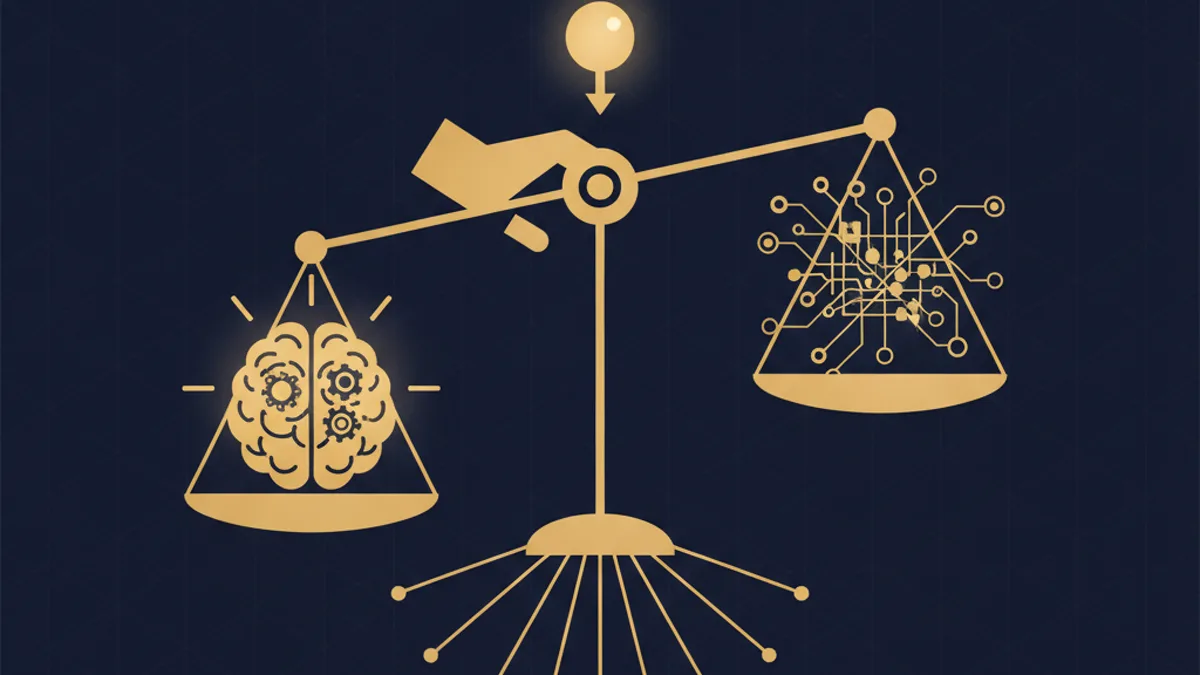
AI can write for you, summarize a long document in seconds, offer three solutions to a problem, and even list the pros and cons of each. The more capable it gets, the more natural it feels to widen the delegation: if it handles the hard part so well, you might as well hand it the last step too, the one where you decide whether an answer is really the right one. That is exactly where it pays to stop for a moment.
What you can delegate and what you cannot
There is a thin but decisive line between two things we often confuse: production and judgment. You can delegate production as much as you like, drafting a text, digging up a figure, condensing twenty pages, the first version of an idea. That is execution work, and AI does it fast and often well. Judgment on that work is another matter: it is deciding whether the text holds up, whether the figure is relevant, whether the proposed solution makes sense in your case and under what conditions. Delegating this too is not a saving of effort, it is giving up control of what you then sign off on and use.
The distinction matters because it changes the question you ask in front of an output. No longer just "is it well written?", but "is it true, is it complete, does it fit me, and what is it leaving out?". AI can help you answer the first question. The second needs something the tool does not have: your full context and your accountability for the result.
Critical thinking is work, not a switch
It is tempting to picture critical thinking as an alarm that goes off when something feels wrong. In reality it is a continuous and slightly uncomfortable activity: questioning an assumption, asking what would happen if the premise were wrong, looking for the alternative reading that was never written. With AI this activity does not disappear, it shifts. You no longer have to produce from scratch, but you have to evaluate far more, and evaluating well is often harder than producing.
The point is that a single answer does not help you do this work, it discourages it. It is coherent, confident, well argued, and it gently nudges you to accept it. This is automation bias: the tendency to take an output as good just because it looks competent. The risk is not that AI is often wrong, it is that when it is wrong it uses the same confident tone as when it is right, and on its own it does not flag the difference. A critical judgment that leans on a single voice is forced to work in the dark.
A single voice asks you to trust, a comparison makes you think
Here it gets practical. If critical thinking needs alternatives to switch on, the most efficient way to feed it is not to comb through every line of one answer on your own, but to put several complementary perspectives on the same problem. From there two signals emerge that a single voice cannot give you. Where the answers converge, you have a solid point to lean on quickly. Where they diverge, you have exactly the point that deserves your attention: the questionable assumption, the hidden trade-off, the path the first model dropped without telling you.
This way critical thinking stops being a tiring check on every word and becomes a targeted reading of where things converge and where they split. You do not delegate judgment, you exercise it better, because you finally work from a range instead of a single point. Disagreement between perspectives, in this frame, is not noise to remove: it is the map that tells you where to look before deciding.
There is also a less obvious but valuable effect. Seeing two different answers to the same problem forces you to spell out what you are really asking, because it is often the difference between the two that reveals your question was ambiguous or incomplete. A single voice, adapting to any phrasing, hides that ambiguity from you. A comparison gives it back, and understanding the question better is already half of critical thinking. It is no accident that the most solid decisions almost always come after reframing the problem, not after accepting the first answer.
What stays yours, and why that is a good thing
When the tool does so much, three things stay yours and do not move. Full context, what you are really trying to achieve, under what constraints and for whom, which almost never fits entirely into a prompt. The value judgment, deciding what matters most among options AI presents as equivalent. And accountability, because you answer for a choice, not the model. Critical thinking is the activity that holds these three together, and it is the reason a decision made with AI stays your decision and not a disguised delegation.
The technical work of getting several identities to write on the same problem and keeping them together in an orderly way can be handled by a meta-layer, a layer that orchestrates the flow for you. What stays with you is the part no one can do in your place: choosing with understanding.
AI Arena is the platform that puts multiple AI identities with different perspectives side by side on the same problem, lets you select the most useful answers, and uses an Orchestrator to move you to the next step. It does not replace your decision, it helps you make it with more awareness. You pick the team, pass the same problem to 7 complementary specialists, select what holds up, and let the flow carry you to the final report. The tool does the hard work, critical thinking stays yours.
Join Arena.
FAQ
What does it mean that critical thinking cannot be delegated to AI?
It means you can hand AI the execution side of the work, drafting a text, summarizing a document, finding a fact, proposing options, but not the final evaluation of that work without giving up control of what you do with it. Critical thinking is the step where you decide whether an answer holds up, what is missing, what assumptions it hides, and whether it fits your case. That step needs your context, your goals, and your accountability, and it is exactly what makes a decision yours even when AI helped you reach it. Delegating production is sensible and useful. Delegating judgment means you stop understanding what you are approving.
Why is it risky to let AI judge its own answers?
Because a single answer mostly asks you to trust it. It is well written, coherent, confident, and it tends to defend the path it chose without showing you the alternatives it dropped along the way. This feeds what is called automation bias, the tendency to accept an output just because it looks competent. The problem is not that AI is often wrong, it is that when it is wrong it uses the same confident tone as when it is right, and on its own it never flags the difference. Without an outside critical eye, or without a comparison, you have no way to tell a solid answer from one that is plausible but fragile.
What stays specifically human when AI does most of the work?
Three things stay yours that AI cannot take over. The first is full context, what you are really trying to achieve, under what constraints and for whom, which almost never fits entirely into a prompt. The second is the value judgment, deciding what matters most among options AI presents as equivalent. The third is accountability, because you answer for a decision, not the tool. Critical thinking is the activity that holds these three together, and it is not a minor task to outsource, it is the part that turns a generic output into a choice that is yours and deliberate.
How do you exercise critical thinking without slowing everything down?
The most efficient way is not to comb through a single answer hunting for flaws on your own, it is to put several perspectives side by side on the same problem and read two simple signals. Where the answers converge you have a solid point you can lean on quickly. Where they diverge you have exactly the point that deserves your attention, the questionable assumption, the hidden trade-off, the alternative path. This way critical thinking stops being a tiring check on every word and becomes a targeted reading of where things agree and where they split. The work of getting several perspectives written and kept in order can be handled by a meta-layer, a layer that orchestrates the flow for you while leaving the choice to you.
How does AI Arena help keep critical thinking yours?
AI Arena is the platform that puts multiple AI identities with different perspectives side by side on the same problem, lets you select the most useful answers, and uses an Orchestrator to move you to the next step. It does not replace your decision, it helps you make it with more awareness. In practice you pick the team and pass the same problem to 7 complementary specialists, each tackles it in its own way and writes its own answer, so you immediately see where the readings line up and where they part. You select what holds up, the system refines and digs deeper, and the Orchestrator keeps the flow together up to the final report. Judgment stays where it belongs, with you, but you work from a comparison instead of a single voice.
Topics