Tag
Decision-making
Deciding with AI: method, criteria, and ownership of the final call.
11 · Articles on this topic

Compare to Choose, Not to Be Right: Getting Real Value From Multiple AIs
Putting several AIs on the same problem can do two very different things: find the voice that agrees with you, or reveal which answer actually holds up. It sounds like a small distinction, but it changes everything. In the first case, comparison becomes a hunt for confirmation and amplifies your bias; in the second, it becomes a decision tool that stress-tests ideas. Knowing the difference is how you avoid wasting the value of having many perspectives on hand, and how you turn model disagreement into a smarter choice instead of an argument to win.

Leading Questions: How Not to Push an AI Toward the Answer You Want to Hear
The way you phrase a question shapes the answer you get back. An AI model is not a neutral judge: it tends to follow the direction you already hinted at, and if your question already contains the answer you are hoping for, it will often hand it right back. Understanding what a leading question is, why AI falls for it, and how to frame neutral requests is a method skill that changes the quality of what you get, especially when a real decision is on the line.

Critical Thinking Cannot Be Delegated: What Stays Yours When You Use AI
AI can write for you, summarize, propose solutions, even argue both sides. So it feels natural to hand it the most important step too: deciding whether an answer is right. That is exactly where you should stop. You can delegate producing a text, finding a fact, drafting a first version, but you cannot delegate the judgment on that text without giving up control of what you do with it. Critical thinking is not one more task to outsource: it is the part that makes a decision yours, even when AI helped you reach it. This piece looks at what stays yours when the tool does so much, and why putting several perspectives side by side is the best way to actually exercise that judgment instead of letting it slip away.

Accountability stays human: AI advises, you answer for it
An AI system hands you an answer that is ready, confident and well written. It is tempting to treat it as a verdict and move on. But between advice and decision there is a line that never shifts: the one who answers for the consequences is always you. A model can propose, rank the options, surface what you missed, but it does not carry the weight of what happens next. This is not a technical limit to overcome, it is the nature of the relationship: a tool advises, a person answers. Grasping this difference changes how you work with AI, because it stops you from looking to the machine for a shortcut around deciding and lets you use its answers to decide better. Accountability is not handed off to whoever gives you an opinion, not even when that opinion is fast, articulate and seems to leave no room for doubt.
The second opinion: when it pays to ask AI for another one
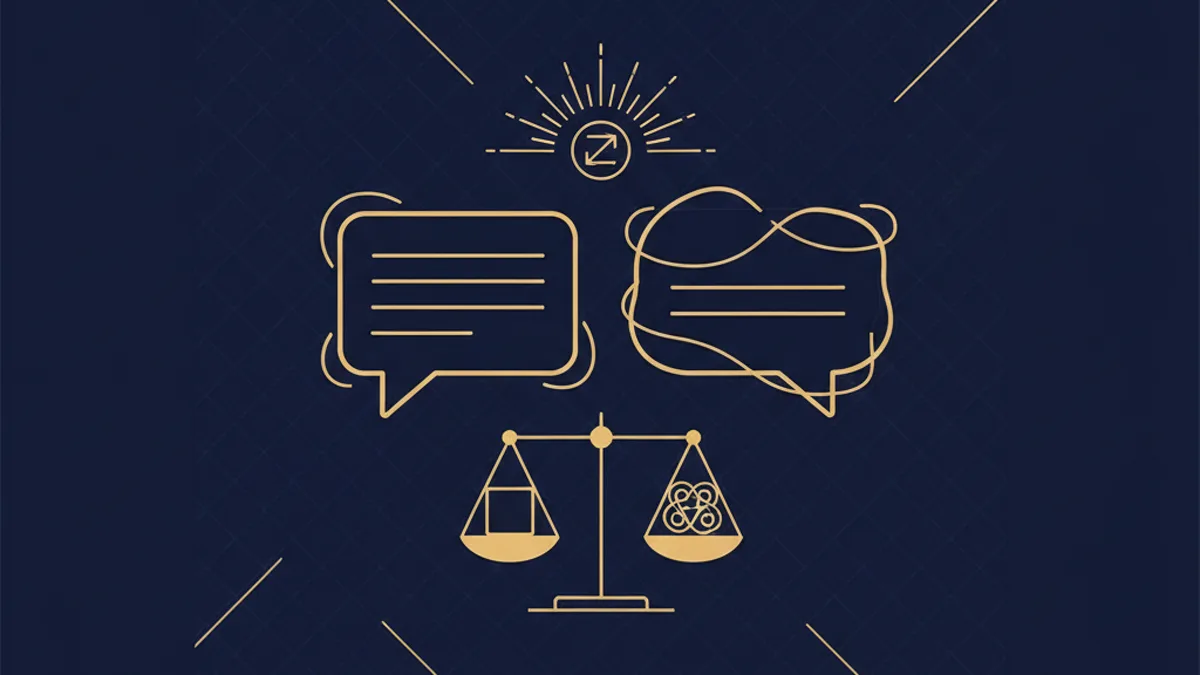
In life we ask for a second opinion almost by instinct: the doctor before surgery, the friend who knows the field before a big purchase. With AI we should do the same, yet almost no one does: the first answer arrives instantly, sounds good, and we stop there. The problem is that a single voice never tells you how sure it is of what it writes, and fluency is not reliability. Asking for a second opinion, though, does not mean repeating the same question hoping for a better answer: it means testing the first one from a different angle. Knowing when it truly matters, when the first answer is enough, and how to ask so it adds something instead of confusing you is one of the habits that separates people who use AI with their head from those who trust it blindly.

When AIs Disagree: Disagreement Is a Signal, Not an Error
When several AI models diverge on the same problem, the divergence is not a fault to smooth over: it is information telling you the ground is uncertain or contested. Whoever relies on a single AI loses this signal. Whoever compares complementary perspectives turns disagreement into more informed, less fragile decisions.

The AI market is moving beyond the generative phase: the next frontier is decision-meta-layer
The generative AI hype phase is coming to an end. Adoption is gaining traction, valuations are stabilizing, and pricing is becoming more segmented. What’s needed today isn’t another model, but something that goes beyond models: a “meta-layer” designed to make informed decisions.

multi-modello Comparison: Why a Single AI Yields a Single Truth
Rely on a single AI model or run five models in parallel. Two trade-offs, neither of which scales when the decision really matters. What changes when multiple complementary perspectives work together, in a structured dialogue, on the same problem?

Sycophancy: Why Generative Models Tend to Pander to the User
sycophancy—the tendency of AI models to please the user—is not a moral flaw. It is a structural consequence of how they are trained. Recognizing this is the first step toward not confusing emotional reinforcement with the quality of a response.

Brainstorming and Structured Decision-Making: How to Make Informed Decisions with AI
Compare, choose, explore, decide: a four-step framework for using AI as a tool for decision-making—multi-agent—without delegating the final judgment.

The advantage of parallel responses: why a single AI limits you
A single artificial intelligence system provides only a single perspective. Comparing multiple complementary agents in parallel reduces errors, reveals hidden biases, and enriches the decision-making process.
All topics