Three Questions to Ask Before You Trust an AI Answer
Every AI assistant hands you the same confident, well-written answer, whether it is right or completely wrong. The tone tells you nothing about how reliable it is. Three simple questions can protect you before you act on a response: what is it based on, would another AI say the same, and is it deciding for you. A minimal method for using AI as a sharp operator, not a passive spectator.
by Redazione AI Arena
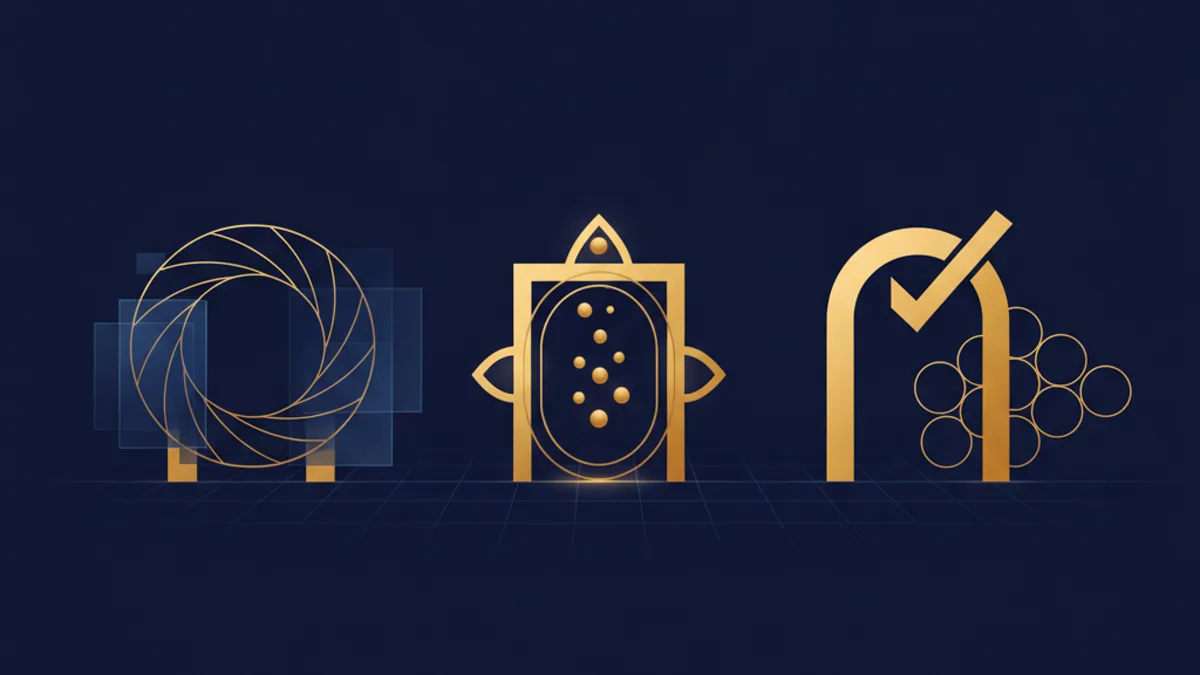
Every AI assistant hands you the same face: confident, tidy, well written. Whether it is dead right or completely wrong, the tone does not change. That uniformity is the delicate part: you cannot judge how reliable an answer is from how it sounds. You need a method, and a method does not have to be complicated. Three questions are enough, asked before you take a response at face value and act on it. They are not there to tear AI down, they are there to help you use it as a sharp operator instead of a spectator.
First question: what is this answer based on?
The first thing to ask is not whether the answer is right, but where it comes from. An AI model does not draw on some truth stored away somewhere: it reconstructs the most plausible continuation from what it has learned. Which means an answer can be fluent and confident even when it rests on nothing, a phenomenon with a precise name, hallucination: the model writes a detail, a source, a number that simply do not exist, as naturally as it writes a real fact.
Asking what the answer is based on forces you to separate two things that usually arrive fused together: the claim and its support. If the answer cites a figure, does that figure exist? If it describes a procedure, does it hold up when you try to walk through it? You do not need to grow suspicious of everything, you need to shift your attention from sounds convincing to is verifiable. The answers that really matter, the ones you build a decision on, earn that second look. The rest, less so.
Second question: would another AI say the same thing?
The second question is probably the most underrated. When you ask a single assistant something and get an answer, that answer feels like the answer. But it is only one of the possible readings, produced by one model with its own setup, its own limits, its own leaning. The trouble is that with a single source you have no way to notice: you cannot tell whether that angle is shared or is a quirk of that one model.
Here an insidious mental mechanism kicks in, confirmation bias: the first answer you receive becomes your reference point, and everything you read afterward tends to get measured against it instead of judged from scratch. A clean way out is to check what another AI would write on the exact same question. Where two readings converge, you have solid ground to stand on. Where they diverge, you have found precisely the spot that deserves your attention: not an annoyance, but the signal that there is a choice to make there. Disagreement between models is not noise to remove, it is a map of where the problem is genuinely open.
Third question: is this answer deciding for me?
The third question is the most uncomfortable, because it is about you, not the model. A well-made AI answer is convenient exactly because it arrives already finished: it tells you what to do, and the temptation to execute without thinking is strong. That is the reflex that leads to over-trusting, automatic trust: the better the tool, the more you stop checking it, right when checking it would matter most.
So ask yourself whether you are using the answer as an input or as a verdict. The whole difference is there. An input you weigh, you compare against what you already know, you keep it or drop it. A verdict you simply take. The decisions that carry a cost, the ones about money, people, time you do not get back, are exactly the ones where the final word has to stay yours. AI is there to get you there better informed, not to take away the act of deciding. The moment an answer stops being material you reason about and becomes the rail you slide along, you have stopped using it and started being used by it.
Where comparison enters the method
The three questions share a common thread: none of them is solved well with a single AI in front of you. The first asks for support, the second asks for a second point of view, the third asks for room for your own head. All three work better when, instead of a single voice, you have several complementary perspectives on the same problem, placed side by side where you can see them together.
That is why structured comparison beats separate conversations scattered across different tabs: it is not about having more answers, it is about being able to read them against each other, with something that holds the flow together instead of leaving you to reassemble it by hand. That coordinating layer, the meta-layer, is what turns a pile of opinions into a method.
AI Arena is the platform that compares several AI identities with different perspectives on the same problem, lets you pick the most useful answers and uses an Orchestrator to move you to the next step, it does not replace your decision, it helps you make it with more awareness. In practice you choose the team, pass your question to 7 complementary specialists, each writes its own reading, you select what holds up, the system refines and digs deeper, and the Orchestrator holds the flow together up to the final report. The three questions stop being an exercise in distrust and become the natural way you work.
Join Arena.
FAQ
Why is tone not enough to tell whether an AI answer is reliable?
Because an AI model writes with the same confidence whether it is right or wrong. The shape of an answer, clean, fluent, decisive, comes from how the model puts text into words, not from how true that content is. That is why tone is no signal of reliability: a convincing answer and a correct answer are two different things, and judging by the first is the most common way to get it wrong. You need a method that shifts your attention from how the answer sounds to what it stands on, and that is exactly the job of the three questions.
What are AI model hallucinations?
A hallucination is when an AI model produces content that is plausible but false: a fact, a source, a citation or a detail that simply does not exist, written as naturally as a real fact. It is not a deliberate lie, it is a consequence of how the model works, reconstructing the most likely continuation of the text instead of drawing on some stored truth. That is why the first question to ask is not whether the answer is right, but what it is based on: separating the claim from its support shows you at once whether there is something verifiable underneath or just a well-built sentence.
Why compare answers from several AIs instead of trusting the first one?
Because with a single source you have no way to know whether that angle is shared or is a leaning of that one model, and confirmation bias kicks in: the first answer becomes your reference point and everything you read afterward gets measured against it instead of judged from scratch. Putting several complementary perspectives on the same problem breaks that reflex. Where the readings converge you have solid ground, where they diverge you have found exactly the point that deserves your attention. Disagreement between models is not noise to remove, it is a map of where the problem is genuinely open.
What does it mean to ask whether an AI answer is deciding for me?
It means noticing automatic trust, automation bias: the better the tool, the more you tend to execute without checking, right when checking would matter most. The third question asks whether you are using the answer as an input, something you weigh and compare against what you already know, or as a verdict you simply accept. In decisions that carry a cost, money, people, time you cannot get back, the final word has to stay yours. AI is there to get you there better informed, not to take away the act of deciding.
How does AI Arena help you ask these three questions?
AI Arena is the platform that compares several AI identities with different perspectives on the same problem, lets you pick the most useful answers and uses an Orchestrator to move you to the next step, it does not replace your decision, it helps you make it with more awareness. The three questions, what it is based on, what another AI would say, whether it is deciding for me, are answered poorly by a single voice and well by several voices side by side. You choose the team and pass your question to 7 complementary specialists: each writes its own reading, you select what holds up, the system refines and digs deeper, and the Orchestrator holds the flow together up to the final report. That way verifying stops being distrust and becomes the normal way you work.
Topics