Multi-step AI pipelines: how separate steps combine into one flow
When people picture AI they usually imagine a single move: one question, one answer. But systems that do real work rarely operate that way. Behind a useful answer there is almost always a sequence of steps, each taking the output of the previous one and pushing it further. It is called a multi-step pipeline, and it is how a complex task gets broken down, tackled piece by piece, and rebuilt into something solid. Understanding how a flow is composed explains why some AI systems deliver reliable results and others do not, and where comparing several complementary perspectives makes every step stronger.
by Redazione AI Arena
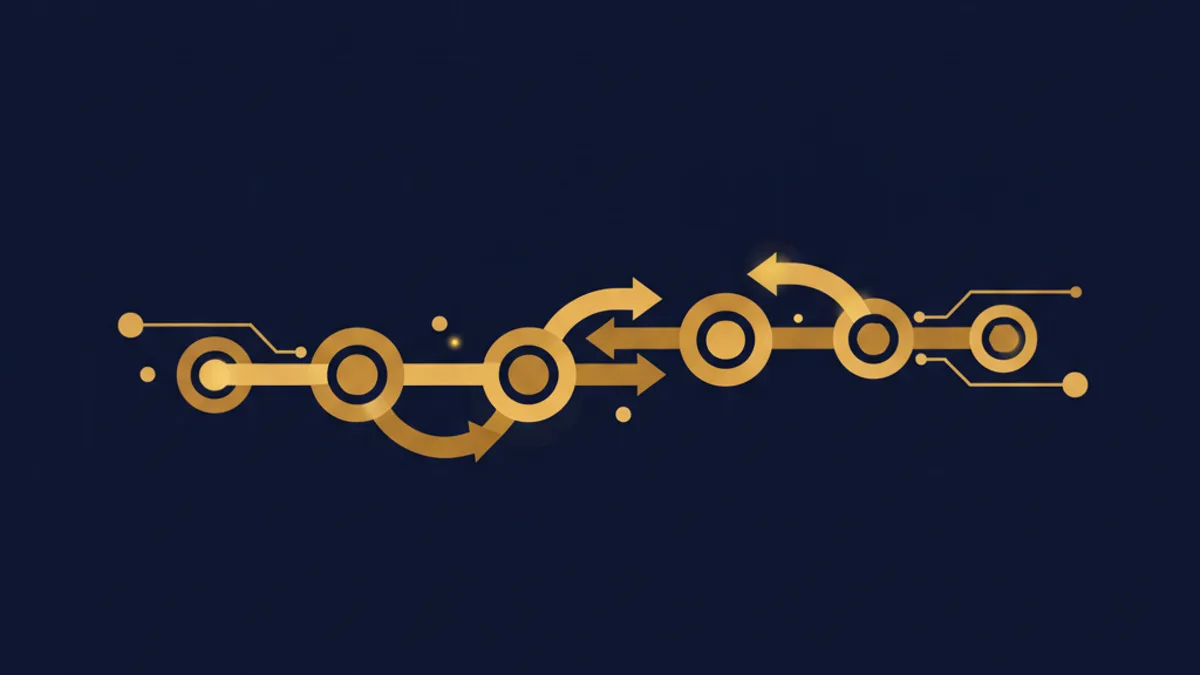
When people think about AI, the image that comes to mind is almost always the same: one question, one answer. A single, immediate move. Yet the systems that do genuinely useful work rarely operate that way. Behind an answer that holds up there is almost always a sequence of steps, each taking what the previous one produced and pushing it a little further. This sequence has a name: a multi-step pipeline, a flow made of several steps. Understanding how it is composed means understanding why some AI systems deliver solid results while others, even when they seem to use the same models, stay fragile.
What a multi-step flow is
The core idea is simple: a complex task is not tackled in a single leap; it is broken into smaller pieces that are lined up in order. Imagine you have to produce an analysis from a set of documents. A first step gathers and organizes the relevant information; a second processes it and draws a reading from it; a third checks that the reading is coherent and refines it. Each step takes the output of the one before as its input and hands its own result to the next. The flow is exactly this: the sensible order in which the steps follow one another, and the way one step's output becomes the next one's input.
The advantage is not cosmetic. A step with a narrow objective — just gathering, just verifying — can be done far more precisely than a single move that has to do everything at once. And because the steps are distinct, you can observe them one by one: see which one works, which one limps, where to step in. A single leap is a closed box; a flow is a sequence you can read.
Why a single step is not enough
A complex task is almost always made of operations that differ from one another. Gathering is not processing, processing is not verifying. Asking for them all at once forces the model to compress them into a single moment, and the result tends to handle one well and only brush the others. Splitting the work into steps gives each operation the room it needs.
There is a second reason, even more important. Between one step and the next you can insert a check. A well-designed flow does not just chain the steps: it places checkpoints along the way, moments where a result is examined before moving on. That way an error does not carry all the way through. This touches the most insidious risk of multi-step flows: error propagation. If the first step starts from a wrong assumption, the later steps inherit and amplify it, and the final output looks coherent but rests on a weak foundation. The intermediate check is what keeps the flow honest.
Chaining is not orchestrating
Here lies the distinction that matters most. Lining steps up is easy: one after another, always the same, always in the same order. But a rigid chain runs its sequence even when it no longer makes sense: it answers even when it should stop, it moves on even when an intermediate result is not convincing. Orchestrating is something else. It means deciding which steps are actually needed, in what order, what passes from one to the next, and above all what to do when a step does not produce a reliable result: redo it, go back, change course.
Governing this part is a meta-layer, a layer that sits above the individual steps and coordinates the flow. It does not perform the specific task — it does not gather or process in place of the others — but it holds the sequence together: it opens and closes steps, manages the checkpoints, sends back whatever needs redoing and closes the loop when the result holds up. It is the difference between a conveyor belt that carries everything in the same direction and a path that adapts to what emerges along the way. On real tasks, where things rarely go smoothly on the first try, this ability to adapt is exactly what separates a robust system from a fragile one.
Where the field is heading, and Arena as the natural conclusion
The direction is clear. As AI systems become more capable, value shifts from the single step to the way the steps combine. What matters is no longer just how good an isolated answer is, but how solid the flow is that leads from the question to the result: where it verifies, where it stops, where it chooses one route over another. And every step of that flow becomes more robust if, instead of relying on a single voice, you open it up to a comparison of complementary perspectives: on the same step, different readings reveal where they agree — solid ground — and where they diverge, and that is where it pays to look before moving on.
This is where Arena fits in. AI Arena is the platform that compares several AI identities with different perspectives on the same problem, lets you pick the most useful answers and uses an Orchestrator to move you to the next step; it does not replace your decision, it helps you make it with more awareness. In practice you choose the team, bring your question, and at each step of the flow 7 complementary specialists write their reading: you select what holds up, the system refines and digs deeper, and the Orchestrator — the meta-layer that holds the sequence together — guides you step by step to the final report. That way the flow is not a blind chain that just executes, but a path where, at every step, you decide with more awareness.
Enter the Arena.
FAQ
What is a multi-step pipeline in AI?
A multi-step pipeline is a sequence of operations in which each step takes the output of the previous one and moves it closer to the goal. Instead of asking a model to solve everything in a single shot, the task is broken down: one step gathers and organizes the information, another processes it, another verifies or refines the result. Each step has a narrow, well-defined objective, and that is exactly why it can be done more precisely. The flow is what holds these steps together in a sensible order, so that the final output is the product of several coordinated operations rather than one big leap.
Why is a single step often not enough for a complex task?
Because a complex task usually contains several different operations, and asking for all of them at once forces the model to compress them into one leap, doing one well and only brushing the others. Breaking the work into steps gives each one a clear boundary: gathering, processing and checking become distinct moments that can be observed and improved separately. On top of that, you can insert a verification between one step and the next, so an error does not carry all the way through. A well-composed flow is more reliable precisely because it does not trust everything to a single moment.
What is the difference between chaining steps and orchestrating them?
Chaining means lining steps up one after another. Orchestrating means deciding which steps are needed, in what order, what passes from one to the next, and what to do when a result is not convincing. The difference is made by the meta-layer, the layer that governs the flow: it does not perform the individual task, but it holds the sequence together, manages the checkpoints and sends back whatever needs redoing. A rigid chain always runs the same steps; an orchestrated flow adapts to what emerges along the way, and that is what makes it robust on real tasks.
What can go wrong in a multi-step flow?
The main risk is that an error in an early step propagates through the whole flow: if the first step starts from a wrong assumption, the later steps inherit and amplify it, and the final result looks coherent but rests on a weak foundation. That is why well-designed flows insert checkpoints between steps, moments where a result is verified before moving on. Another risk is rigidity: a flow that always runs the same sequence without adapting tends to answer even when it should stop or go back. Verification along the way is what keeps the flow honest.
How does a multi-step pipeline connect to comparing several AIs in Arena?
AI Arena is the platform that compares several AI identities with different perspectives on the same problem, lets you pick the most useful answers and uses an Orchestrator to move you to the next step; it does not replace your decision, it helps you make it with more awareness. Comparison is how each step of the flow becomes robust: on a single step, 7 complementary specialists can offer different readings, you select what holds up, and the system refines and digs deeper before moving on. The Orchestrator is the meta-layer that holds the sequence together up to the final report, so the flow is not a blind chain but a path where at every step you choose with more awareness.
Topics