Tag
Orchestration
How a workflow with several models and several steps is held together.
10 · Articles on this topic
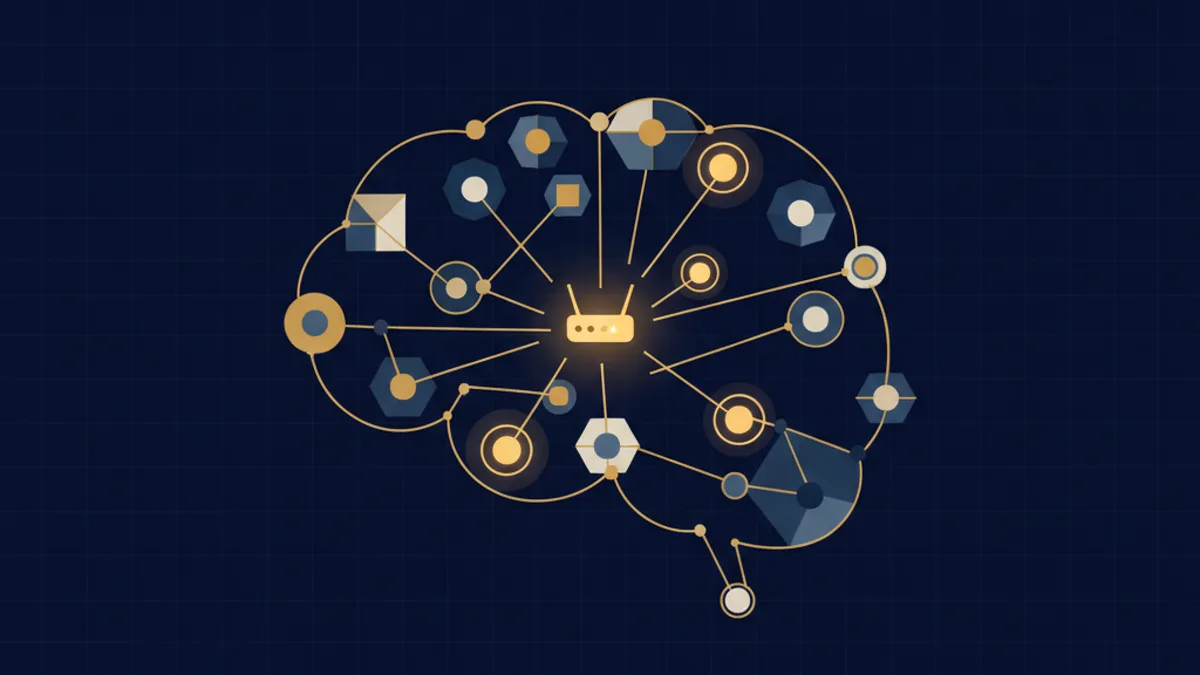
Mixture of Experts: how an AI model fires only the right experts
For years the intuition about AI models was simple: bigger means smarter. But there is a hidden cost, because every answer lights up the entire model even for the most trivial question. Mixture of Experts breaks that link: it splits knowledge into many specialized sub-networks and activates only a few at a time, chosen by an internal router. So a model can be huge in total knowledge and light in what it uses per answer. Yet it stays one model, with one view of the problem: the router picks among experts that share the same training. For decisions that matter, the limit is not efficiency, it is the single perspective, and that is the jump that leads to Arena.
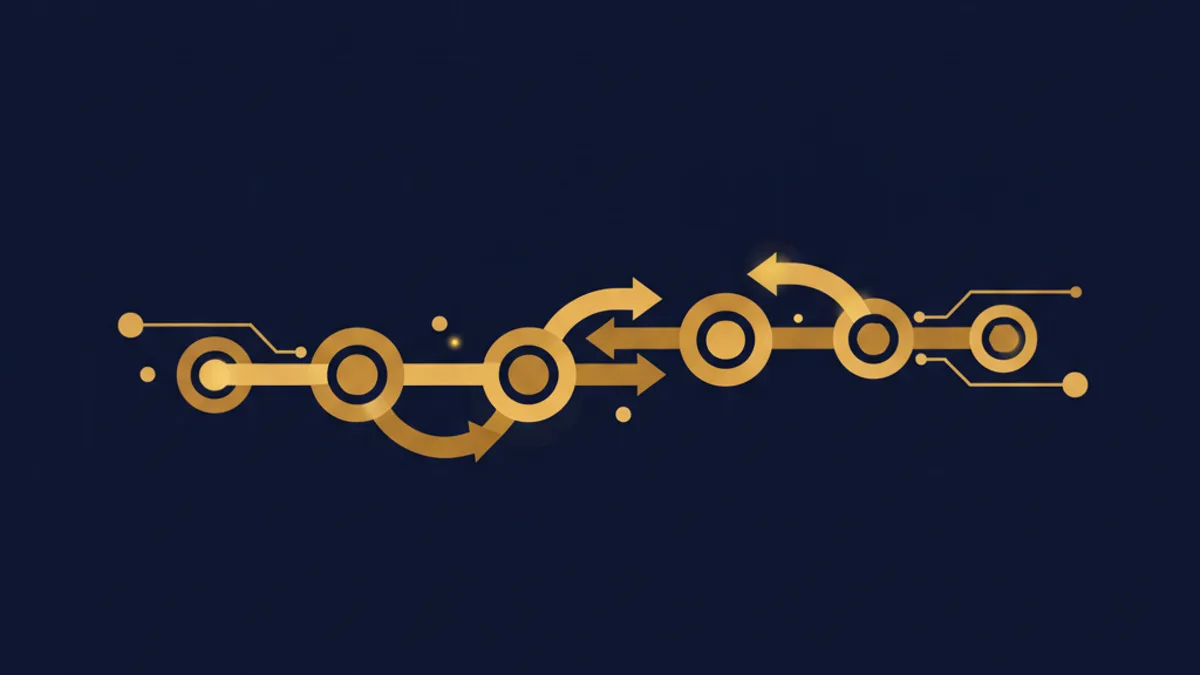
Multi-step AI pipelines: how separate steps combine into one flow
When people picture AI they usually imagine a single move: one question, one answer. But systems that do real work rarely operate that way. Behind a useful answer there is almost always a sequence of steps, each taking the output of the previous one and pushing it further. It is called a multi-step pipeline, and it is how a complex task gets broken down, tackled piece by piece, and rebuilt into something solid. Understanding how a flow is composed explains why some AI systems deliver reliable results and others do not, and where comparing several complementary perspectives makes every step stronger.

Break the problem down: why a smaller question gets better answers
There's a natural reflex when you sit down with an AI: ask it the biggest question you can, the one you'd love to see solved in a single shot. It feels like the most efficient way to work, but it's usually what produces the weakest answers. Huge requests force the model to compress too much, to blend separate concerns, to silently decide which piece to handle first. Breaking the problem into smaller questions isn't a step down: it's how you get answers that are more precise, more verifiable, and easier to compare. Understanding why helps you work better with any AI system, and shows you where comparing multiple perspectives makes the difference.

AI Ensemble: Why Multiple Models Beat a Single Answer
Asking one model means betting on one way of seeing the problem: if that view has a blind spot, you inherit it whole. The idea of an ensemble, which in AI systems means combining several models instead of picking just one, exists for exactly this reason: an answer built on multiple complementary perspectives is almost always more robust than a single one, because the isolated errors of one model get exposed by the others. It is not an average that flattens everything, but a comparison that reveals where several views converge, and therefore hold, and where they diverge, and therefore deserve attention. It is the shift from 'what one AI says' to 'the most solid answer that several AIs, compared side by side, can help you see'.

Specialized or Generalist AI Models: A False Dilemma
When picking an AI tool, people often ask whether a generalist that does a bit of everything beats a specialist trained deeply on one domain. It sounds like a technical question, but it shapes the quality of your everyday work: breadth versus depth, with hidden trade-offs on both sides. And today it may be the wrong question entirely.

The AI market is moving beyond the generative phase: the next frontier is decision-meta-layer
The generative AI hype phase is coming to an end. Adoption is gaining traction, valuations are stabilizing, and pricing is becoming more segmented. What’s needed today isn’t another model, but something that goes beyond models: a “meta-layer” designed to make informed decisions.

The Orchestrator: the architecture that sets Arena apart from single-instance AIs
A single AI conversation involves only one voice at a time. A system that is multi-agent and lacks coordination is nothing more than parallel noise. The Orchestrator—is the layer that brings multiple responses into dialogue, highlights points of agreement and disagreement, writes the final report, and proposes the next prompt. What changes with a layer of intelligence that coordinates?

Agile Decision-Making: AI Redesigned for Daily Operations
Decisions don’t wait for you to sit down at your desk. They happen on the go—between meetings, on the subway, or while waiting in line at a coffee shop. Most AI tools are designed primarily for desktops, with responsive adaptations. Arena has reimagined the user experience for touch and workflow. Here’s what that means for decision-makers.

Tired of working with so many browser tabs? Ask multiple AIs at the same time
A separate tab for each AI, copy-and-paste for comparison, and disjointed, disconnected conversations. AI Arena consolidates the workflow into a single view, with multiple complementary agents working in parallel on the same issue.

Prompt engineering and orchestration: AI Arena does it for you
You don’t have to be a prompt engineer to get high-quality answers. AI Arena’s Orchestrator writes the structured prompt, selects the team, manages the context, and provides you with the next step, all ready to go.
All topics