The second opinion: when it pays to ask AI for another one
In life we ask for a second opinion almost by instinct: the doctor before surgery, the friend who knows the field before a big purchase. With AI we should do the same, yet almost no one does: the first answer arrives instantly, sounds good, and we stop there. The problem is that a single voice never tells you how sure it is of what it writes, and fluency is not reliability. Asking for a second opinion, though, does not mean repeating the same question hoping for a better answer: it means testing the first one from a different angle. Knowing when it truly matters, when the first answer is enough, and how to ask so it adds something instead of confusing you is one of the habits that separates people who use AI with their head from those who trust it blindly.
by Redazione AI Arena
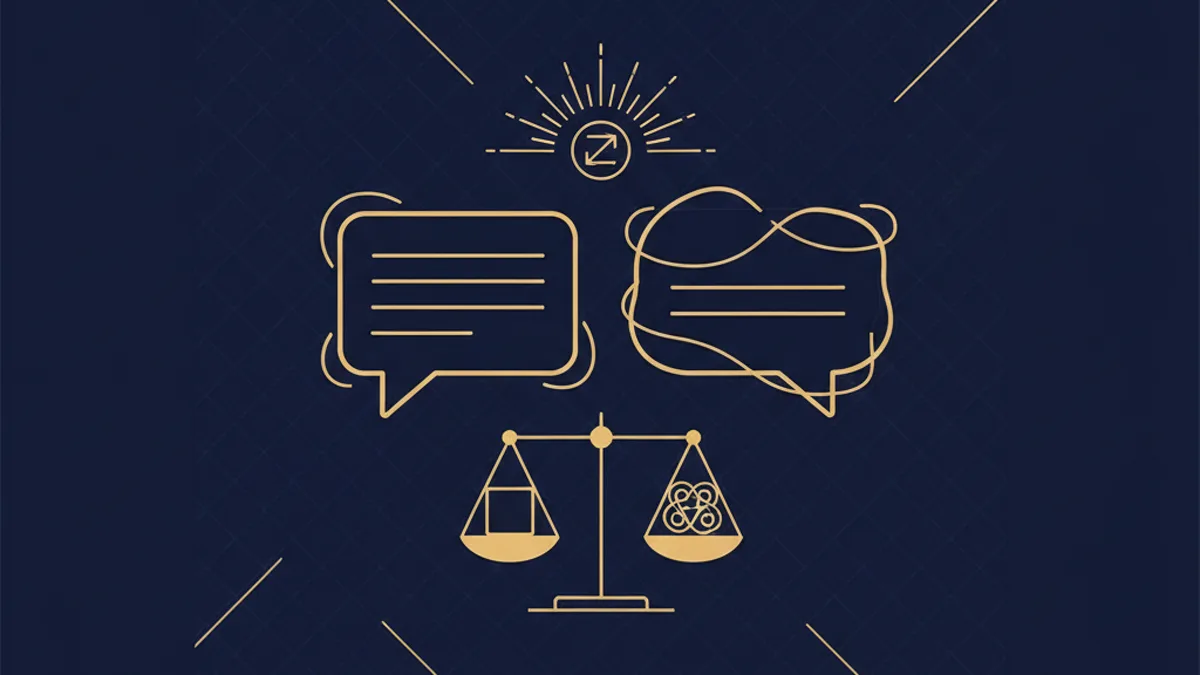
You asked an AI system something, the answer came back in an instant and it sounds good. Do you trust it? Sometimes yes, sometimes a small voice tells you to check. That gesture — asking someone else whether the first answer holds up — we make it constantly in life, almost by instinct: the doctor's second opinion before surgery, the friend who knows the field before a serious purchase. With AI we should behave the same way, yet almost no one does. And the interesting part is not "always ask for a second opinion," but knowing when it truly matters, when the first answer is enough, and how to ask so it adds something instead of confusing you.
What a second opinion is when you work with AI
A second opinion is not repeating the same question hoping for a better answer. It is testing an answer you already have, looking at it from a different angle. The difference is real: in the first case you are just rolling the dice again with the same model, in the second you are looking for a different viewpoint that confirms or challenges what you are holding.
Why does it matter with AI more than with almost any other tool? Because a model never tells you how sure it is of what it writes. A fragile answer and a solid one come out with the same confident tone, the same fluency, the same air of competence. And we tend to read that fluency as reliability, when there is no link between the two. A second opinion exists precisely to break this illusion: to surface where the first answer stands on solid ground and where it stands on nothing.
When it really pays to ask
Not every question deserves a second opinion, and asking for one on everything cheapens it. The signals that should light up the warning lamp are few and clear.
The first is the stakes. If the decision is hard to undo once made, or if a mistake costs a lot — time, money, credibility — then hearing a second voice is time well spent. The second is the impossibility of verifying: when the answer touches something you have no way to check on your own, you have no handle to tell the true from the merely plausible, and a single voice leaves you with no safety net.
The third signal is subtler: the answer that agrees with you too easily. If the model confirms exactly what you hoped for, with no friction, no objection, no "but," it is worth being suspicious. Models tend to please whoever is asking (sycophancy), to smooth the edges to come across as agreeable. A second opinion, from a different angle, is the fastest way to tell whether that confirmation is solid or just polite. Add to these the topics where different approaches are known to lead to different conclusions: there, comparison is not a luxury, it is the bare minimum.
When the first answer is enough
There is an honesty that makes AI genuinely useful, and it is admitting that the first answer is often more than enough. If the stakes are low and you can verify the result yourself in seconds, multiplying opinions adds noise, not value. A calculation you recheck by hand, a piece of information you confirm against a reliable source, a draft you will reread and fix anyway: here a second opinion is a cost with no return.
Because a second opinion has a price — time, attention, the effort of comparing — and using it indiscriminately consumes it exactly when you would need it. The practical rule is a single one: the more important the decision and the less able you are to verify it yourself, the more comparison pays off. Conversely, the more reversible and controllable it is, the more you can trust the first answer and move on.
The second opinion done right: compare, do not repeat
There is a common mistake: asking the same thing again to the same model, maybe changing a couple of words, and calling it a second opinion. It is not. Repeating the same question to the same system tends to produce a variant of the same answer, with the same limits and the same blind spots. You are not comparing perspectives, you are hearing the same voice twice.
A real second opinion comes from a different angle: another framing of the problem, a model with different boundaries, a perspective that does not share the same blind spots as the first. Useful information emerges from the clash of viewpoints — where answers converge, and there you have a strong signal of solidity, and where they diverge, and there you have the exact map of the points to verify before deciding. Disagreement, read this way, is not a nuisance to smooth over: it is the most valuable part, because it tells you exactly where to look.
It is also the direction the more mature AI systems are moving toward. Not the race for the single all-knowing answer, which does not exist, but the ability to see the same problem from several angles and understand where it holds and where it does not. The second opinion thus stops being an occasional gesture and becomes the natural way to work: not "one voice and then, maybe, another," but several voices from the start, side by side and comparable.
AI Arena is the platform that pits multiple AI identities with different perspectives against the same problem, lets you select the most useful answers, and uses an Orchestrator to take you to the next step, it does not replace your decision, it lets you make it with more awareness. Instead of asking for a second opinion one answer at a time, you get many together: you pick the team, 7 complementary specialists each write their own version of the same problem, and you immediately see where they converge and where they diverge. You select what holds up, the meta-layer carries the flow through to the final report, and the final decision stays yours — but you make it having already heard every opinion that counts.
Join Arena.
FAQ
What does asking an AI system for a second opinion mean?
It means testing an answer you already have by looking at it from a different angle, not repeating the same question hoping for a better result. In life we do this all the time: before an important decision we hear a second competent voice to see if the first one holds up. With AI the same principle applies, with one difference: a model never tells you how sure it is of what it writes, so the first answer can sound perfect and be fragile without you noticing. A second opinion exists exactly for this: to surface where the first answer stands on solid ground and where it stands on nothing. It is not distrust of AI, it is the way to use it knowingly instead of blindly.
When does it really pay to ask AI for a second opinion?
It pays when the stakes are high and a mistake costs a lot, when the answer touches something you have no way to verify on your own, and when the model sounds very confident but you have no handle to check it. Another useful signal is a first answer that agrees with you too easily: if it confirms exactly what you hoped for, with no friction and no objection, it is worth hearing another voice, because models tend to please whoever is asking. Topics where different approaches are known to lead to different conclusions also deserve a comparison. The practical rule: the more important the decision and the less able you are to verify it, the more a second opinion pays off.
When is the first AI answer enough?
It is enough when the stakes are low and when you can verify the result yourself in seconds. A calculation you check by hand, a piece of information you confirm against a reliable source, a draft you will reread and fix anyway: in these cases multiplying opinions adds noise, not value. Asking for a second opinion costs time and attention, and using it on everything cheapens it exactly when you would need it most. The honesty of admitting that the first answer is often more than enough saves the comparison for the moments that truly matter, when a decision is hard to undo once made.
Why is repeating the same question to AI not a real second opinion?
Because repeating the same question to the same model, maybe with slightly different words, tends to produce a variant of the same answer, with the same limits and the same blind spots. You are not comparing perspectives, you are just hearing the same voice twice. A real second opinion comes from a different angle: another framing of the problem, another perspective, a model with different boundaries than the one that answered first. Useful information emerges from the clash of viewpoints, that is where answers converge and where they diverge. The difference between a good second opinion and a duplicate is all here: in the diversity of the viewpoint, not in the repetition.
How does AI Arena help you get a second opinion?
AI Arena is the platform that pits multiple AI identities with different perspectives against the same problem, lets you select the most useful answers, and uses an Orchestrator to take you to the next step, it does not replace your decision, it lets you make it with more awareness. Instead of asking for a second opinion one answer at a time, you get many at once and side by side: you pick the team, 7 complementary specialists each write their own version of the same problem, and you immediately see where they converge, which is a signal of solidity, and where they diverge, which is the map of the points to verify. Disagreement between the voices is not a nuisance but the value of the comparison. You select what holds up, the meta-layer carries the flow through to the final report, and the final decision stays yours, but you make it having already heard every opinion that counts.
Topics