Tokenization: how an AI model really reads text
When you read a sentence you split it into words without noticing, and you build meaning on top of those pieces. An AI model does something similar before it understands anything, but the pieces it breaks text into are not our words: they are tokens, fragments that can stand for a whole word or just part of one. That first cut has a name, tokenization, and it is the invisible move that everything else depends on: how much a response costs, how much text the model can hold at once, where it stumbles. Understanding how a model splits text takes apart the idea that it reads the way we do, and shows why a single way of cutting is also a single point of view. That is exactly where the value of comparing several perspectives comes from.
by Redazione AI Arena
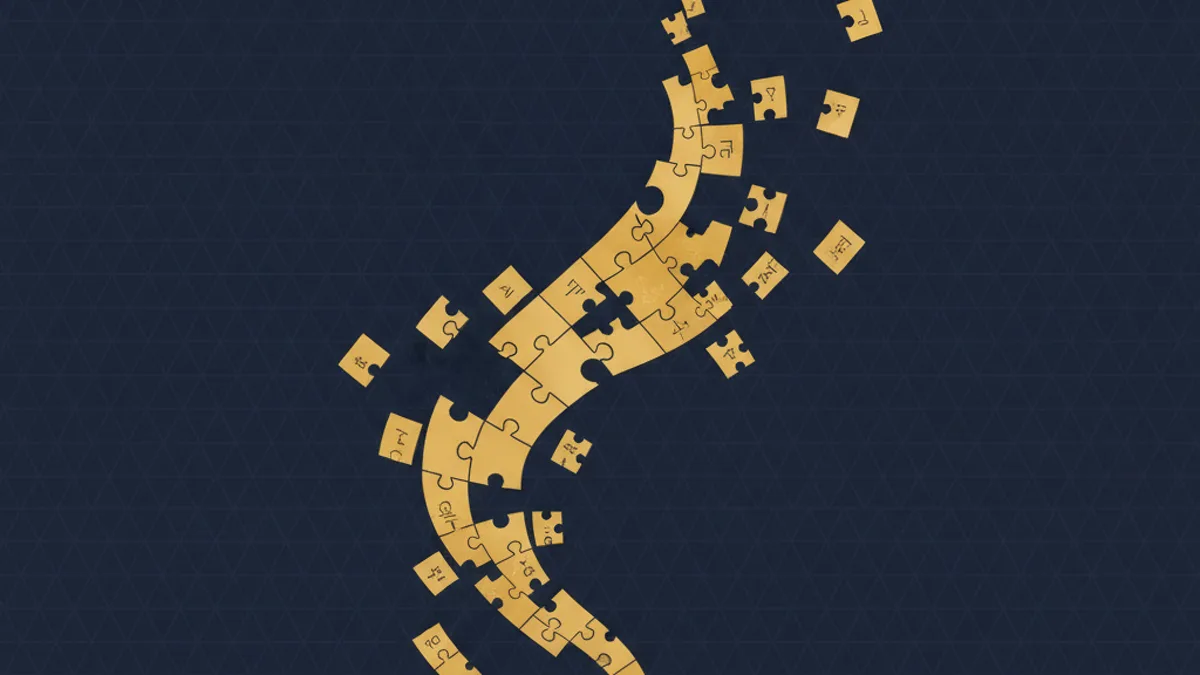
When you read this sentence you do not process it letter by letter, nor as a single block: you split it into words, almost without noticing, and you build meaning on those pieces. An AI model does something similar before it understands anything, but the pieces it breaks text into are not our words. That first cut has a precise name: it is called tokenization, and it is the invisible move that everything the model does next depends on.
What it means to tokenize text
A model does not see letters or words the way we do: it sees tokens, that is, small pieces of text a sentence is split into before it is processed. A token can be a whole word, but often it is a shorter fragment — a root, an ending, part of a rare word — or a space or a punctuation mark. The word "tokenization", for example, can become three or four separate pieces for a model, while a common word like "house" stays whole.
So why not simply use words? Because the world's languages are too many and too varied, and the possible words are practically infinite: proper names, technical terms, typos, invented words. Learning a list of all of them would be impossible. By breaking text into smaller recurring pieces, the model can represent anything it faces, even a word it has never met, by rebuilding it from fragments it already knows. It is an elegant compromise between two opposite needs: covering all of language without memorizing an endless vocabulary.
Why that first cut matters more than it seems
It looks like a detail for insiders, and yet it touches very concrete things. In the world of models, a great deal is measured in tokens rather than words. How much a response costs is counted in tokens. How much text the model can hold at once — its context window — is measured in tokens. The speed at which it produces a response depends on how many tokens it has to generate. The token, not the word, is the system's real unit of measure.
This has practical consequences you notice using AI every day. The same content written in a less-represented language than English can require more tokens: for the same meaning, it weighs more and costs more. A long number, a date, a code, an unusually written word can be split at points that change how the model treats them — and it is one of the reasons it sometimes stumbles on things that seem trivial to us, like counting the letters in a word or handling precise figures. It is not carelessness: underneath, it is working on pieces that do not match what we see.
Where the way of cutting becomes a limit
Every model has learned to split text in a certain way, decided when it was built, and it never changes from there. That cut is a strength — it is what lets the model be fast and handle any word — but it is also, inevitably, a single way of splitting. It favors certain languages and certain writing styles and penalizes others; it splits some words at useful points and others at confusing ones; on an ambiguous term it tends to make the same kind of choice every time.
It matters to see it for what it is: not a flaw to fix piece by piece, but the nature of a single perspective, applied at the very first step, before meaning even comes into play. When you rely on a single model, you are not just adopting its way of reasoning: you are also adopting its single way of reading text, with the blind spots it carries. And those blind spots are systematic, meaning they show up at the same points every time, which makes them hard to notice from the inside.
From a single cut to many readings
This is exactly the direction the AI world is moving in: stop looking for the single perfect model and start composing several models, several perspectives, on the same problem. Not because a model is wrong, but because every model is a point of view — starting from how it cuts words — and several points of view, put in relation, say something none of them would say alone.
The advantage, in practice, comes down to two signals that are easy to read. Where several models read and answer the same way, you have a solid point to lean on. Where they diverge, you have found exactly the delicate passage — the ambiguity, the slippery term, the interpretable data point — that a single perspective would have carried you past without warning. You do not need to understand the mechanics of tokenization to make use of all this: you just read the convergences and the divergences. The work of having several perspectives write and keeping them together in an orderly way can be handled by a meta-layer, a layer that orchestrates the flow for you and leaves the choice to you.
AI Arena is the platform that compares several AI identities with different perspectives on the same problem, lets you select the most useful answers and uses an Orchestrator to move you to the next step; it does not replace your decision, it helps you make it with more awareness. You pick the team, pass the same problem to 7 complementary specialists, and see at once where their readings match and where they drift apart: you select what holds up, the system refines and digs deeper, and the Orchestrator keeps the flow together up to the final report. It is how you turn the limit of a single cut of the text into the advantage of many perspectives compared side by side.
Join Arena.
FAQ
What are tokens in an AI model?
Tokens are the small pieces of text a sentence is split into before the model processes it. A token can be a whole word, but very often it is a shorter fragment: a root, an ending, part of a rare word, or a space or a punctuation mark. A common word like house usually stays a single piece, while a long or unusual word like tokenization gets broken into three or four pieces. The model does not see letters or words the way we do: it sees this sequence of tokens, and everything else in its work starts from here. In one image: before it reads any meaning, the model cuts text into small bricks.
Why does a model split text into pieces instead of using whole words?
Because the possible words are practically infinite and change from language to language: proper names, technical terms, typos, invented words. Learning a list of all of them would be impossible. By breaking text into smaller recurring pieces, the model can represent anything it faces, even a word it has never seen, by rebuilding it from fragments it already knows. It is an elegant compromise between two opposite needs: covering all of language without memorizing an endless vocabulary. The price of that compromise is that the cut does not always follow meaning: sometimes it splits a word at points that mean nothing to us.
Why does tokenization matter for people who use AI and not only for those who build it?
Because many practical things are measured in tokens, not words. How much a response costs, how much text the model can hold at once, how long the context window is: everything is counted in tokens. Text in a less-represented language can require more tokens than the same content in English, so it weighs more for the same meaning. Even small differences count: an extra space, an unusually written word or a long number can be split in ways that change how the model treats them. Knowing there is this invisible cut underneath helps explain why AI sometimes stumbles right where you least expect it.
In what sense is the way text is cut also a limit?
Because it is a single way of splitting, decided when the model was built, and it never changes from there. That cut favors certain languages and certain writing styles and penalizes others, splits some words at useful points and others at confusing ones, and on an ambiguous term or a number it can create the same misunderstandings every time. It is not an error to fix piece by piece: it is the nature of a single perspective applied at the very first step, before meaning even comes into play. And it is why, on a question that matters, relying on a single model means relying on its single way of reading text, with the blind spots that come with it.
How does AI Arena help against the limits of a single way of reading text?
AI Arena is the platform that compares several AI identities with different perspectives on the same problem, lets you select the most useful answers and uses an Orchestrator to move you to the next step; it does not replace your decision, it helps you make it with more awareness. In practice you pick the team and pass the same problem to 7 complementary specialists: each tackles it in its own way, starting from how it reads and weighs text, and writes its own answer. This way you see at once where the readings converge, giving you a solid point, and where they diverge, giving you exactly the delicate passage a single perspective would have let slip past. You select what holds up, the system refines and digs deeper, and the Orchestrator keeps the flow together up to the final report.
Topics