Tag
How an LLM works
Tokens, embeddings, attention: what really happens inside a language model.
12 · Articles on this topic

AI model parameters: what those billions really mean
Every time a new AI model ships, the first thing you read is a number: billions of parameters, as if it were an engine displacement. But what are these parameters really, and does that number actually say what it seems to say? This piece explains what a parameter is without the jargon, why bigger does not mean more accurate, what really matters beyond a model size, and why the smart move is not chasing the biggest model but comparing complementary perspectives on the same problem — which is exactly where Arena comes in.

Read the Output Before You Use It: the Last Check Stays Human
An AI model hands you clean, confident, well-written text — and that very smoothness is the trickiest part: an output that reads well looks ready to go, and the temptation to copy and paste it without a second read is strong. But polish is not accuracy. Reading before using is not red tape or a sign of distrust toward the tool: it is the last check, the one that stays human, and it changes how an AI answer becomes your decision. In this piece we look at why a convincing output is not a verified output, what to actually watch for when you read it back, and why this move is a method, not wasted time — right up to the point where it leads to Arena.

Mixture of Experts: how an AI model fires only the right experts
For years the intuition about AI models was simple: bigger means smarter. But there is a hidden cost, because every answer lights up the entire model even for the most trivial question. Mixture of Experts breaks that link: it splits knowledge into many specialized sub-networks and activates only a few at a time, chosen by an internal router. So a model can be huge in total knowledge and light in what it uses per answer. Yet it stays one model, with one view of the problem: the router picks among experts that share the same training. For decisions that matter, the limit is not efficiency, it is the single perspective, and that is the jump that leads to Arena.

Semantic Search: How AI Understands Meaning, Not Just Words
For decades, searching meant matching words: you type a term, the system returns the documents that contain that exact term. Semantic search changes the rules. It doesn't chase words, it chases meaning: it grasps that a question phrased one way and an answer written another way can be about the same thing even without sharing a single word. Behind this leap sits a different way of representing language, one that lets AI find what you mean and not just what you type. Understanding how it works helps you read the systems you use every day, and see why comparing several perspectives is still the step that matters.

The System Prompt: What Really Steers an AI Model
When you write to an AI assistant, you never start from a blank page. Before your question arrives, the model has already been handed a set of instructions you never see. It is called the system prompt, and it is the layer that decides who the model is, how it writes, and what it can do. Grasp it, and you understand why two AIs answer the same question so differently.

Tokenization: how an AI model really reads text
When you read a sentence you split it into words without noticing, and you build meaning on top of those pieces. An AI model does something similar before it understands anything, but the pieces it breaks text into are not our words: they are tokens, fragments that can stand for a whole word or just part of one. That first cut has a name, tokenization, and it is the invisible move that everything else depends on: how much a response costs, how much text the model can hold at once, where it stumbles. Understanding how a model splits text takes apart the idea that it reads the way we do, and shows why a single way of cutting is also a single point of view. That is exactly where the value of comparing several perspectives comes from.

Attention: How an AI Model Decides What Matters in a Sentence
When you read a sentence, you don't give every word the same weight. Some slide past you, others make you stop, and you get the meaning mostly from how you connect them. An AI model does something similar, and it has a precise name: attention. It is the mechanism that lets it, while processing text, decide which words matter most for interpreting the others, and hold the meaning together instead of reading word by word in a flat line. Grasping this idea clears up a common mistake, the belief that the model reads the way we do. It doesn't read: it weighs. And the way it weighs words is also its deepest limit, because it is a single way of deciding what counts. That is exactly why putting several perspectives side by side beats trusting one reading alone.

Embeddings: how an AI model organizes meaning
When you type a sentence into an AI system, something invisible happens before it even answers: your words are turned into numbers, into coordinates inside a space. This step has a name, embedding, and it is one of the building blocks under almost everything AI can do today, from search by meaning to the ability to connect distant ideas. This is not an insider detail: grasping, in broad strokes, how a model lays concepts out in this space helps you see why it nails some things and fails others. The model does not know the world the way you do, but it holds a map of meaning, and that map explains a lot of its behavior. It is worth looking inside, without jargon, so you can use AI with more awareness.
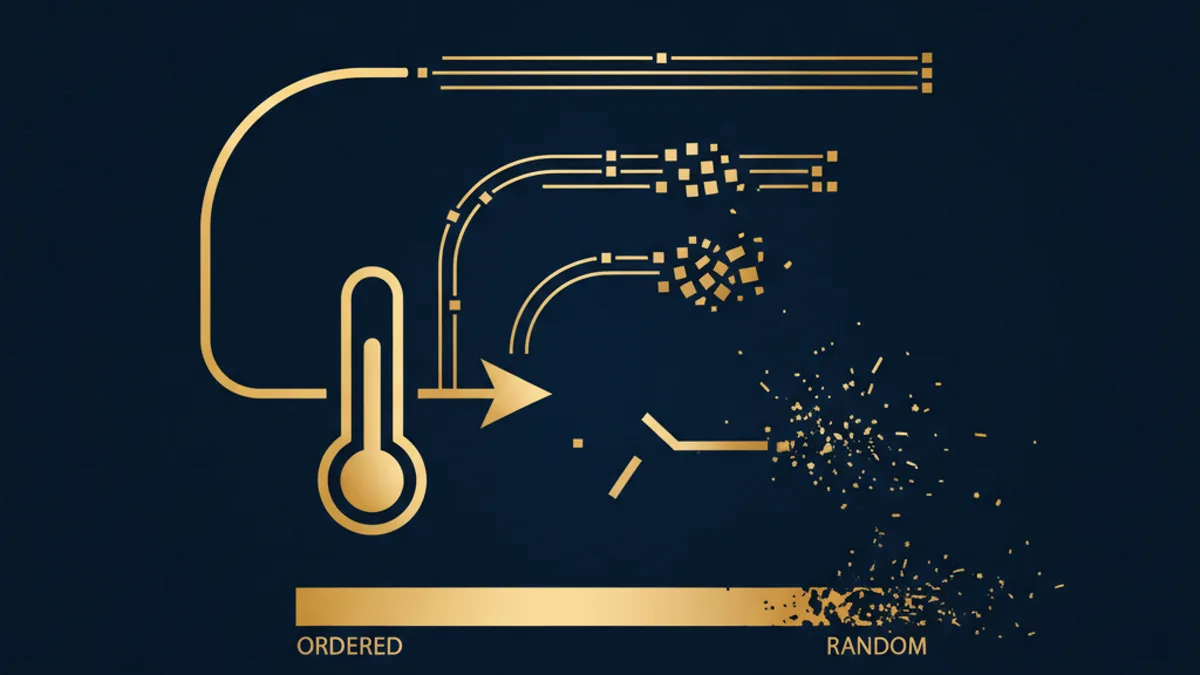
Temperature: Why the Same Question Gets Different AI Answers
Ask an AI system the same question twice and you can get two different answers. It is not a bug or a glitch: it is a design choice, controlled by a parameter called temperature. Temperature sets how much freedom the model gives itself when picking the next word: low, and answers become predictable and repeatable; high, and they become varied and creative but less stable. Understanding this parameter suddenly explains a lot of things that seem strange: why a model sometimes makes things up, why two tries do not match, why the same request works better one moment and worse the next. This is not a detail for engineers: it is the reason you cannot judge an AI system on a single answer, and why comparing multiple perspectives matters more than one lucky attempt.

Specialized or Generalist AI Models: A False Dilemma
When picking an AI tool, people often ask whether a generalist that does a bit of everything beats a specialist trained deeply on one domain. It sounds like a technical question, but it shapes the quality of your everyday work: breadth versus depth, with hidden trade-offs on both sides. And today it may be the wrong question entirely.

When AIs Disagree: Disagreement Is a Signal, Not an Error
When several AI models diverge on the same problem, the divergence is not a fault to smooth over: it is information telling you the ground is uncertain or contested. Whoever relies on a single AI loses this signal. Whoever compares complementary perspectives turns disagreement into more informed, less fragile decisions.

Sycophancy: Why Generative Models Tend to Pander to the User
sycophancy—the tendency of AI models to please the user—is not a moral flaw. It is a structural consequence of how they are trained. Recognizing this is the first step toward not confusing emotional reinforcement with the quality of a response.
All topics